Thursday, December 25, 2003

Some when's, how's and why's of shared care - What separated parents who spend equal time with their children say about shared parenting [*]

Australian Institute of Family Studies, SPRC Australian Social Policy Conference 2003, The University of New South Wales, Sydney, Australia, 9-11 th July 2003


BRUCE SMYTH, CATHERINE CARUANA & ANNA FERRO

[*] We are extremely indebted to the focus group members who volunteered much personal information about themselves and their post-separation circumstances. Most participants did so in the hope that this information would make a difference to the lives of others. To protect their anonymity, their names and any identifying information have been changed. The authors would like to thank Dr Ros Hurworth for her expert tuition of focus group methodology, and Professor Patrick Parkinson, Associate Professor Katharine Betts, Associate Professor Lawrie Moloney, and Sophie Holloway for their helpful comments: any errors of course are the authors’ own.

Abstract

Despite the broad policy push towards encouraging co-parenting after separation – most notably the recently announced parliamentary inquiry into a rebuttable presumption of joint residence – little is known about parents who opt for shared care of their children, how these arrangements are structured, and how well they work.

In this paper, we examine the motives, and reflections of separated parents who share equally in the care of their children, as well as the types of schedules devised. Our data are qualitative and derive from a series of focus groups held earlier this year. Fifty-six separated parents (27 mothers, 29 fathers) were interviewed on a range of issues related to parent–child contact. Groups were structured around five different patterns of father–child contact: (a) 50:50 shared care (eg., ‘week about’), (b) medium-range contact (<110 nights per year), (c) daytime-only contact, (d) holiday-only contact; and (e) little or no contact. Participants were recruited through a range of non-probability sampling strategies.

While these data are primarily being used to inform a larger study investigating contact and child-support issues, they also offer useful insights into shared parenting – particularly in relation to the work/family balance, co-parental conflict, and financial issues.

I. Introduction

With around one million children under 18 living with only one of their natural parents in Australia (ABS 1998), a core concern for public policy continues to be how to foster the ongoing care and support of children following parental separation. Currently a raft of issues related to contact and child support are presenting significant challenges to policy and family law in Australia. Prominent among these challenges are (a) high rates of paternal disengagement, (b) the desire by many fathers and mothers for greater levels of father-child contact – paralleled by a desire by many grandparents for greater contact, (c) the ability of the family law system to deal with violence and abuse (and allegations thereof), relocation disputes, and the enforcement of contact orders, (d) the fairness of the child support formula – particularly in relation to the costs of contact to non-resident fathers and ... the list goes on. (For discussion of these issues see, for example, Behrens 1996a; Easteal et al. 2000; Fehlberg & Kelly 2000; Fehlberg & Smyth 2000; Green 2003; Henman & Mitchell 1999; Murphy et al. 2003; Parkinson & Smyth 2003; Rhoades et al. 2000; Woods 1999.)

The Federal government has recently announced a parliamentary inquiry to investigate whether a rebuttable presumption of joint residence should become part of Australian family law – that is, if parents separate and cannot agree on arrangements for their children, the starting point should be that children spend equal time with each parent unless there is evidence that this arrangement would not be in the children’s best interests. Equal time would normally mean that children would move between two homes.

Why 50:50 care? The upcoming parliamentary inquiry “seeks to address community concerns about the operation of contact and child support arrangements for separated families and reflects the Government’s commitment to ensuring that, to the greatest extent possible, children have the benefit of the love and care of both their parents when a couple separate” (Williams & Anthony 2003). This view is consistent with arguments, as put by advocates of joint residence, which focus on the benefits for children of maintaining a close relationship with both parents. By contrast, opponents of shared care typically emphasise children’s need for stability and the potential harm for children of being exposed to ongoing high levels of parental conflict, parental neglect or psychopathology (Bauserman 2002; Brotsky et al. 1991).

Despite the significant policy push towards encouraging split care after separation, little is known about parents who opt for shared care of their children, how these arrangements are structured, and how well they “work”. This is not surprising given that shared care is relatively rare in Australia. Indeed, less than three percent of children with a natural parent living elsewhere had “shared care” arrangements in 1997 (ABS 1998). Moreover, less than 4 percent of parents registered with the Child Support Agency last year were deemed to have equal (or near equal) care of their children (Child Support Agency 2003). [1]

The inherent complexity of shared care is currently being played out in policy by a lack of consistency between different departmental and legislative guidelines as to what constitutes “shared care”. For instance, since 1 July 2000, to reflect “shared care” arrangements, non-resident parents exercising contact with their children for more than 10 per cent of nights may seek to have Family Tax Benefit apportioned to each parent according to their respective levels of care (Family and community Services 2000a). The Child Support Scheme, on the other hand, requires a minimum level of care of 30 per cent of nights per year before child support liabilities can be reduced. The Scheme defines “shared care” as between 40-60% of nights per year.

Arguably the most obvious recent embodiment of current policy tensions around “shared care” – aside from the recently announced inquiry into 50:50 care – is the defeated Child Support Legislation Amendment Bill (No 2) 2000. That Bill proposed that non-resident parents exercising contact with their children for between 10 and 30 per cent of nights would pay a reduced amount of child support. The rationale for the Bill was to recognise more directly the costs incurred by non-resident parents in having contact with their children (Family and Community Services 2000b). It is noteworthy that Clause (b) in the recently announced parliamentary inquiry’s terms of reference – “whether the existing child support formula works fairly for both parents in relation to their care of, and contact with, their children” (emphasis added) – indeed testifies that strengthening the nexus between child support and contact, as proposed by the defeated Bill, still has currency.

From a legal standpoint, there has been a gradual shift in recent years towards a more equitable division between parents of the rights and obligations of the parenting role. The Family Law Reform Act 1995 (the “Reform Act”) saw the introduction of s60B which outlined the principles underpinning the law relating to children. These included that “children have the right to know and be cared for by both their parents ...” and that “parents share duties and responsibilities” in relation to the care of their children. The amendments also sought to remove the proprietorial connotations of the terms “custody” and “access” with the more neutral terms of “residence” and “contact”. In addition, the right to make day-to-day decisions regarding the child was no longer the sole province of the custodial parent. Thus the present situation is that both parents now retain an equal level of parental responsibility following separation except insofar as this is necessarily modified by the effect of residence and contact orders or is the subject of a specific issues order.

It may be that the view that these reforms have effectively imported the US notion of joint legal custody [2] into Australian family law i.e., joint parental decision making, will be eclipsed by the larger debate concerning rebuttable joint residence. The government’s interest in a “joint residence” model, following closely on the heels of the Family Law Amendment (Joint Residency) Bill 2002 introduced by One Nation Senator Len Harris in June 2002, may be heralding the most extensive reform of the law relating to children since the introduction of the Family Law Act in 1975.

In many ways the patchwork of policy and law reform around shared care is understandable. First, society has changed markedly in recent decades. Movement away from a (maternal) “sole custody” model of parenting towards encouraging co-parenting after separation means that the boundaries around sharing the care of children have become fuzzier. Policy necessarily lags behind social change.

Second, as noted by Gauthier (1996: 4), family policy in most developed countries continues to comprise a loose amalgam of disparate measures rather than being “comprehensive, explicit, and well co-ordinated”. In Australia, the complexity of the way in which the Family Law Act 1975 interacts with the Child Support (Registration & Collection) Act 1988, the Child Support (Assessment) Act 1989, the Social Security Act 1991, and the A New Tax System (Family Assistance) Act 1999, makes the formulation and implementation of family policy on shared care difficult. To what extent a rebuttable presumption of joint residence can bring coherence to this policy mosaic, and address the various significant challenges outlined earlier, is unclear.

More practically, however, what does this patchwork of policy mean for separated parents charged with sharing parental responsibilities under the Reform Act? And what does it mean for the children who must live with the decisions that their parents (or the courts) make? In Australia, little is actually known about the “nuts and bolts” of post-separation parenting – namely, when, what, where, and how it occurs. Even less is known about parents who spend equal (or near equal) time with their children. In this paper, we examine the arrangements, motives, and reflections of such parents. While the primary purpose of the data being drawn on is to inform a larger study investigating contact and child-support issues, they also offer useful insights into who opts for shared care arrangements, how these arrangements are structured, and how well the arrangements work.

The empirical terrain

A voluminous literature exists on joint legal custody (see, for example, Folberg 1984; Benjamin & Irving 1989), the bulk of which has been produced during the 1980s by scholars working in North America. It is a complex literature because of the various methodologies and samples employed across studies (Benjamin & Irving 1989; Bauserman 2002), and the occasional conflation with joint physical custody. [3] In this paper, we provide a thumbnail sketch of some of the key empirical studies that relate directly to joint physical custody.

In one of the earliest examinations of joint physical custody, Abaranel (1979) conducted intensive case studies of four families with split care arrangements. She found that these arrangements could work well under certain conditions: (a) commitment; (b) flexibility; (c) mutual co-parental support; and (d) the ability to reach agreement on implicit rules (Abaranel 1979). To these four relational factors, she also adds geographical proximity (a structural factor) and suggests that other structural factors may also temper the workability of shared care. These factors include the age, number, and age range of children (such that certain configurations may be easier than other configurations), the temperament of children (for a “difficult” child, one home may be more stabilising than two), and the presence of step-parents and step-siblings. Abaranel (1979) urged legal and mental health professionals to keep an open-mind on joint custody arrangements because of her belief that this pattern of care promotes strong parent–child attachments.

Brotsky and her colleagues (1991) examined 48 families with shared care arrangements in order to identify the factors that can help to make joint custody work for parents and children. Their sample comprised recently separated parents who were in the process of developing joint legal and physical custody arrangements. Some parents made their own arrangements, while others were in dispute over their arrangements. Families were provided with: a six-week education program; up to 12 mediations sessions aimed at the development of a parenting plan; a child assessment to help individualise the parenting plan; and 6 and 12 month follow-up sessions.

At 12-month follow-up, families were classified into one of three outcome categories: “successful” (n=12); “stressed” (n=20); or “failed” (n=15). According to Brotsky et al. (1991), parents in the “successful” group felt good about the arrangement, and were able to negotiate and cooperate on parenting issues. Parents in the “stressed” group were able to reach a mutually acceptable agreement in mediation and were keeping to their arrangement “legally and technically” (Brotsky et al. 1991: 169). They could agree and negotiate some of the time but had bouts of conflict which jeopardised their arrangements. Parents in the “failed” group could not reach agreement in mediation (and thus had their parenting arrangement imposed on them by the court), or could not maintain their agreement. Parents in this group were “extremely distressed, dissatisfied with the custody arrangements and each other, and could not share childrearing responsibilities without bitter and overt conflict” (Brotsky et al. 1991: 169).

Not surprisingly, Brotsky and her colleagues (1991) found a strong association between levels of parental conflict and child outcomes. Children of the “successful” parent group were “doing well” whereas children of the “failed” parent group were doing “very poorly”. It is noteworthy that when respondents were subsequently followed up at 18 months after participating in the program, the “successful” and “failed” groups had not changed whereas the “stressed” group had improved to the point where it approximated the profile of the “successful” group. Brotsky et al. (1991) thus pointed to the utility of mediation and professional support for helping some families who may be struggling with co-parenting issues.

More recently, in the US context, Braver and O’Connell (1998) explored the evidence for a rebuttable presumption of joint residence. They point out that:
… the issue of joint residential custody being the rebuttable presumption of most divorce cases is often raised by father’s rights groups as a panacea. But is this a viable solution?

Unfortunately…there is simply not enough evidence available at present to substantiate routinely imposing joint residential custody…The limited analyses other researchers have performed don’t strongly recommend it be imposed either.

Just because there is no evidence to recommend it, should it be opposed? After all, there was limited scientific evidence to support a great many policies that have turned out, once adopted, to work well, according to the evidence that later became available. While it is recommended that the children have substantial contact with both parents…it is not necessary that this time be split exactly down the middle….A parent overly concerned that he see his child exactly the same amount of time as his ex-spouse becomes more of an accountant than a parent. Furthermore, this strict accounting of time can also set the stage for many future arguments, when arrangements must be changed because of extenuating circumstances, which routinely come up…. Joint legal custody and substantial contact – though not necessarily exactly equal – with both parents appears to be an ideal solution for most children (Braver & O’Connell 1998: 223-224) (emphasis in original).
And in the most recent comprehensive review of joint residence, Bauserman (2002) conducted a meta-analytic review of 33 studies [4] comparing child adjustment in joint- versus sole-custody parenting arrangements. He found that children in joint custody (physical and/or legal [5] ):
were better adjusted than children in sole-custody settings, but no different from those in intact families... The results are consistent with the hypothesis that joint custody can be advantageous for children in some cases, possibly by facilitating ongoing positive involvement with both parents (Bauserman 2002: 91).
However, Bauserman points out that parental conflict is typically a confounding variable in comparative work across different types of parenting arrangements. Indeed he himself was unable to tease out the role of parental conflict because most of the studies he reviewed did not control for conflict, and parents who opt for shared care are likely to be self-selected for low conflict. This makes it hard to unpack what’s doing the work: structure (i.e., the pattern of care) or process (eg., the level of conflict)? The structure–process issue cuts to the heart of much of the debate around shared care. Work by Ricci (1997) gives primacy to process over structure.

The conceptual terrain: Post-separation parenting patterns

According to Ricci (1997), the way that parents relate to each other as parents is crucial to how well children adjust to family transitions and change. She argues that:
if a pattern is destructive, neither equal time nor a traditional every-other-weekend visitation arrangement can protect a child. But when a parenting pattern is constructive, many arrangements can work (p.115).
Ricci (1997) distinguishes two classes of parenting patterns – those that are healthy and those that are not. She suggests that unhealthy parenting patterns can take four forms: (a) “abusive parenting”; (b) “neglectful parenting” (which can include hidden neglect whereby parents feed, clothe and house children but offer little in the way of emotional support because they are pre-occupied with their own issues, work or with other relationships); (c) “exclusive parenting” (which typically involves clear, fixed boundaries between what each parent does, with one parent in the role of chief decision maker; the negative side of this pattern can emerge when the non-resident parent is cut out and/or disengages – leaving the burden of care giving to fall on one parent), and (d) “parallel parenting” (which essentially means that little or no communication occurs between parents; they essentially run their own race as parents) (Ricci 1997).

Healthy parenting patterns, on the other hand, typically take three forms: (a) “positive exclusive” parenting (in which one parent assumes the major responsibility for children but both parents nonetheless work well together, and the children have frequent and ongoing contact with the parent with less responsibility for their care), (b) “shared parenting” (which is a “structured businesslike working relationship” in which parents work together to raise their children; children are kept out of relational issues between parents); and (c) “cooperative parenting” (which goes a step further than shared parenting in that there’s give-and-take in the parental relationship; parents help each other and give clear primacy to children’s wellbeing). Ricci (1997) is quick to point out that these different patterns are not static, and parents can (and often do) move from one pattern to another, especially once the initial acrimony of relationship breakdown passes.

So, for Ricci (1997: 118), the “prize” is not a particular timeshare arrangement (such as 50:50 care) but a healthy pattern of parenting since it is this that gives children the chance to develop normally. Other US scholars, such as Johnston, concur. Johnston (2003) is currently pushing to “reframe the agenda” on joint physical custody. She argues that the issue is not how blocks of time are divided or apportioned but how well parents can work together. To this end, Johnston believes that policy should aim at the development of primary dispute resolution interventions that provide better ways of handling conflict, rather than at different ways of allocating time.

At the heart of Ricci’s (1997) framework is a core set of ideas about creating a cooperative parenting arrangement. These ideas (Ricci 1997: 7-8) have particular utility in the context of understanding shared care:
  1. “Children love, want, and need both parents”. Both parents are fundamental to a child’s wellbeing and development. [6]
  2. “Each child is unique” (as is each family’s circumstances). What one child can deal with, another cannot. The best interests of children should always be paramount in making decisions about contact, with the appropriateness of different patterns of care contingent on a range of factors, including the quality of care, as well as children’s individual temperament, resilience, stage of development, and experience.
  3. A good legal agreement does not guarantee a good outcome. For Ricci (1997), “[a] first-class legal agreement is at best a good piece of surgery. It does not guarantee recuperation. The agreement alone is not enough. Parents need to learn how to make agreements work in daily life. [This is especially important given that]..., not all agreements are first-class, nor are they all arrived at justly”.
  4. The way in which parents relate to each other is critical. According to Ricci, “children do poorly when their parents are engaged in open hostilities and even worse when their parents involve them in the battle. The longer and more intense the war, the more potential long-term damage to their child”.
  5. The “good divorce” [7] is possible, and is worth the effort. The secret to the “good divorce” is that there are standards of conduct. A good divorce also takes work (as does a good marriage). These standards of conduct can be learned and worked at.
Our working hypothesis is that parents who opt for shared care arrangements are likely to practice “shared” or “co-operative” parenting (as defined by Ricci) and to subscribe to the above five tenets – if not initially, certainly eventually. We explore this idea in Part III.

II. Methodology

This paper draws on qualitative data derived from a series of focus groups. These data were collected as part of the development of a larger study of parent–child contact after separation – The Caring for Children After Separation Project.

There were three main reasons for running the focus groups: (a) to develop sharp open-ended questions for the larger quantitative component of the study; (b) to obtain a different methodological vantage point on key aspects of interest – especially in relation to context, diversity, and process; and (c) to check that no important issues had been missed in the quantitative interview schedule being developed.

Research design

Ten focus groups were conducted (see Figure 1 overleaf). Each group comprised 4-7 respondents, and related to one of five patterns of post-separation care: (a) near-equal or shared care (e.g., ‘week about’); (b) mid-range contact (ie the non-resident parent had some contact but not more than 110 nights per year; this contact involved overnight stays during the year aside from holidays); (c) daytime-only contact; (d) holiday-only contact; and (e) little or no contact. All groups (except one [8] ) comprised same-sex respondents to minimise the risk of conflict or power differentials, and to ensure that members within each group were as similar as possible on certain key attributes. It is this similarity that allows for differences across the groups to be explored.

Figure 1. Recruitment strategy [10 focus groups - 56 separated parents]
  • 50:50 care n=12 [fathers (n=7); mothers (n=5)]
  • little/no contact n=12 [non-resident dads (n=6); resident mums (n=6)]
  • mid-range contact n=13 [non-resident dads (n=6); resident mums (n=7)]
  • holidays-only contact n=8 [non-resident dads (n=4); resident mums (n=4)]
  • day-only contact n=11 [non-resident dads (n=5); resident mums (n=6)]
Recruitment
Participants were recruited through a range of non-probability sampling technique. Specifically, a story appeared in the Melbourne Herald-Sun about the Caring for Children Project. The story mentioned the focus groups and called for volunteers. Snowball sampling was also used. Focus group participants, Institute staff, and the AIFS email alert service was used to invite separated parents who fell into one of the five contact types to participate. A range of organisations was also contacted by letter to recruit participants.

All potential participants were screened using an intake protocol, and the quota of six for each group was filled where possible (see Figure 1).

Participants: All focus groups

The final sample for the focus group component of the study comprised 56 separated parents (29 mothers; 27 fathers), each of whom had at least one child under 18 at interview. The average age of the youngest biological child of each respondent was 10 years, 3 months (SD=4 years, 3 months). Parents ranged in age from 26-58 years (mean=42 years; SD=7.5 years) and had been separated for around 6 years (median = 5.5 years; M=6.3 years; SD=3.7 years). Just over half (54%) were single. Forty-four per cent of the sample reported getting along pretty well with their former partner; 27% reported not getting along too well; almost one quarter of the sample avoided any contact with their former partner; while the remaining 5% had contact but fought and did not get along.

Almost half (48%) the sample were recruited from the newspaper story, 39 per cent were recruited through snowballing, while 13 per cent were derived from the AIFS email alert service or from the organisations that were approached. There was a relatively even spread of participants from the various sources across all groups.

Questions

A structured interview schedule was used comprising around a dozen questions. Focused group interviews have a particular logic (see Figure 2). Questions are guided by a funnel design. Relatively broad, easy, non-threatening questions are initially asked to promote group cohesion, rapport and trust. Introductory questions are then followed by transition questions (which help participants move their thinking towards the key issues), and finally key questions (which are targeted and more personal in nature) are asked. Usually only the key questions are of real interest; the other questions are used to create the emotional space for participants to focus and feel safe. Note that, as far as practical, the same questions are asked of all of the groups so that points of contact and disparity can be explored both across and within the groups.
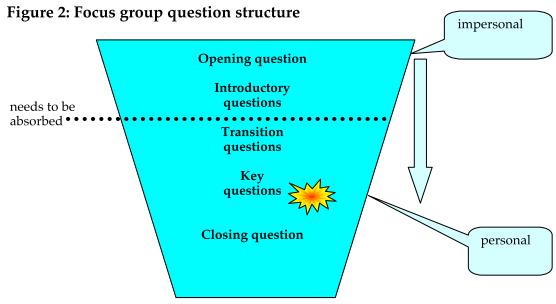
Figure 2: Focus group question structure

Examples of the questions are:
  • Could you tell me a bit about how your particular arrangement works? [Introductory question]
  • Why this pattern of contact? [Transition question]
  • What sorts of things have affected your contact arrangements? [Transition question]
  • How is the overall pattern of contact working for everyone – for you, your former partner, and the children? [Key question]
  • What advice would you give to other separated parents in making arrangements for children after separation? [Closing question]
Logistics

All of the focus groups were conducted at the Australian Institute of Family Studies in Melbourne. The groups comprised 4-7 members. Focus group sessions lasted about 90 minutes, were held across a two-week period in February 2003, and were audio taped and transcribed. Participants were paid a small amount of money to cover any expenses incurred in attending the sessions.

Each group had a moderator, and a moderator’s assistant. The project team (two females, one male) filled these roles. Where possible, female groups were moderated by female team members while the male team member and a male colleague (not part of the team) moderated the male groups.

Participants: 50:50 care focus groups

The sample on which this paper is based comprised the 12 separated or divorced parents who were in the two 50:50 shared care groups. These groups can be seen in Figure 1, p8). Only two of the 12 parents were from the same former union.

All of the parents lived close to each other (within 10 k; range: 1-30k). Seven of the 12 parents reported getting along well with their former partner, 3 said that they didn’t get along too well, and two had little or no communication. All except three of the participants made their own parenting arrangements without involvement in the legal system. All of the men had reduced or relatively flexible work arrangements; and all of the women were in paid work.

Parents in the 50:50 care focus groups look to be a relatively distinct subgroup of separated parents. Their profiles shed light on the some of the necessary conditions required for shared parenting: namely proximity, work flexibility, money and infrastructure, and a co-operative parenting style – which perhaps largely explains why most of these parents did not seek legal interventions. Interestingly, two of the three parents (one male, one female) who did go to court are the same two parents who reported avoiding their former partners in their parenting patterns but nonetheless managed 50:50 care. While this profile is informative in its own right, we now turn to the qualitative data to try to get underneath the family dynamics of shared care.

Three caveats

Three caveats warrant brief mention. First and foremost, the richness and depth of respondents’ individual stories cannot be captured by the crude analysis that follows. Second, it is important to note at the outset that the groups of separated men and women are tiny. Moreover, they were not drawn randomly from the general population of separated or divorced parents. No claim is thus made that the data are representative of shared care parents or generalise to that population. Qualitative data are not used to draw inferences about a particular population at large. Rather, they provide in-depth information about context, diversity and process.

A final caveat relates to focus group research design. Most textbooks (eg., Kruger & Casey 2000) recommend that between 3-20 groups for each condition of interest should be sampled so that key themes have had a chance to emerge and begin to repeat (“saturation”). For practical reasons, and since the data were collected as a validation technique rather than as primary data in their own right, our research design essentially sampled 10 individual groups. We thus cannot be confident that the issues that emerged are the only issues for the shared care group.

III. Findings (read Musings)

This section is structured in two parts. First, three case studies are offered. Second, key themes that emerged from the data are presented. Given the micro-scale of the design and samples, the following observations are framed as “musings” rather than findings.

Case studies

Little is known in Australia about how parents who opt for shared care split their time with their children. 9 Data from the focus groups, though somewhat limited, point to great diversity. What follows are three brief case studies that illustrate a range of 50:50 contact schedules, and the family dynamics around these schedules.

Case study #1: Marcus

Marcus is 30, and has been separated for about 4 years. He has repartnered, and has had a “week about” arrangement pretty much from the word “go” with changeovers occurring on Fridays (see Figure 3). Marcus is a walking advertisement for shared care, and for engaged fatherhood:
“I have two daughters: one who’s 7 and the other’s just turned [9]. And they’re awesome kids. I love hanging out with them. They never cease to amaze me, and they’re always entertaining. We just love hanging out”.
Like some of the focus group members in the 50:50 care group, Marcus’ dealings with his former partner are not always cordial and cooperative. He does not define his arrangement as “co-parenting” but rather sees it as two parents each doing their own thing (i.e., what Ricci refers to as “parallel parenting”). Nonetheless he was one of the most enthusiastic advocates of the joys of shared care:
“I was actually rapt when I heard about it [the possibility of shared parenting] because it’s an enormous opportunity for me. It’s been a great experience. When I went to court to get the divorce the Magistrate said to me: “How’s it going? I haven’t seen many people in your situation.” I said, “It’s been going fantastic!” She was amazed, and hadn’t heard much of that.
Marcus continues:
“A lot of guys who have just separated don’t realise that it’s an option. They think “standard care” is all there is out there”.

Case study #2: Sally and Rod

Sally (aged 45) and Rod (aged 49) have been separated for 4 and a half years. They have two boys, and a teenage daughter. Rod has repartnered but Sally has not. They have an extremely cooperative relationship and are happy with their shared parenting arrangement (see Figure 3). The complexity of their arrangement appears to be a function of each family member’s need to have frequent contact with one another.

According to Sally:
“We have a very informal arrangement which we just arrived at ourselves and we’ve stuck with that since.... I think we’ve been separated about four and a half years now. So we have stuck to that for the sake of the children. And we do a little bit like what you were saying...the children are with me Sunday night, Monday night, Tuesday night – with Rod Wednesday night, Thursday night. And on the weekends we swap so whoever’s weekend it is has them on the Friday night and then the other person has them on the Saturday night and the Sunday and then they come back to me on the Sunday night. It sounds mucky – it works for us. None of us wanted to not see them for very long. I don’t know how you do the week without them thing. Neither Rod nor I would agree to that for a minute. We might now that they’re at secondary school but I couldn’t have managed that personally when they were young.”
Sally and Rod’s schedule is very child-focused in that the children’s activities act as anchor points for changeover. For instance, on Saturdays, the boys play basketball. One parent arrives with the children. Both parents watch the game, after which the other parent takes the children. The weekend rotation means that weekend time (often viewed as “quality” leisure time by parents) is shared so that Friday and Saturday night care is alternated, allowing both parents to have a social life.

In passing it is noteworthy that Sally and Rod had discussions this year with their children about changing the pattern of care. They were concerned that their teenage daughter might have wanted something a little different to her younger brothers. To both parents” surprise, all three children wanted to keep the pattern as it was.

Case study #3: Kathy

Kathy is 40. She and her former husband have shared the care of their 10-year-old son and 6-year-old daughter for five years. Kathy’s arrangements (see Figure 3) and perceptions differ markedly in some ways from those of Marcus, and Sally and Rod. This may be because Kathy and her former partner have little contact with each other. Essentially they “parallel” parent. They have been involved in extensive litigation regarding the children.

Kathy says:
“Well mine’s [her arrangement] very rigid and we don’t deviate or else I end up back in court. The children’s changeover is predominately after school so Monday night they go to their dad’s, then they get picked up from school. Tuesday they’re at their dad’s. Wednesday I pick them up from school. Then they’re with me Wednesday night and Thursday night. Weekends alternate and on his weekend he brings them back to me on the Sunday night.

The kids adjusted to it. They get annoyed at times and say, “I wish I didn’t have to go” or “I wish I didn’t have to do this!” Because it’s not an amicable situation, then there’s lots of games being played of socks not being returned and toys can’t be transferred. And things like that. We have issues around their possessions and then they’re manipulated as part of a power struggle. So that becomes quite difficult. But in relation to the children, they know the routine. It’s been that way basically since ...what, we’ve been split now 5 years and it was probably six months after the split, this was the arrangement. And so it hasn’t been any different. But you know, how they’d like it I don’t really know at this stage because they just know that’s what the judge said so that’s the arrangement.”
It is interesting to note that one of the anchor points in both Sally and Kathy’s schedules is Sunday night, whereby the children start the school week with their mother. On this point, Kathy is clear:
I agreed to allow him access because he was their father at the end of the day but given that Patrick was about to start school I stipulated that I wanted them on the Sunday night so at least I knew that he would go to bed at a reasonable hour and he would be ready for school. Yeah, so that’s basically how we set it up. He said “I want 50/50” and I said “well not quite” because at least at the beginning of the week I know they’ve gone to bed and as I said they were only really little. And he was entitled to be a father still. But there have been a lot of pitfalls because it hasn’t been like yours [like Sally’s], as in amicable. There were egos that we had to contend with as well as access. And quite often he forgets that the actions that he’s taking are ultimately affecting them - they will affect me but I can get over it because I can see through it whereas they are the ones that have to wear it and live with it and that’s where it’s really hard.
The surrounding text to the Sunday night anchor point suggests elements of the children being “caught in the middle”. Recall that for Ricci (1997), a good legal agreement does not guarantee a good outcome for children, while Brotsky et al.’s (1991) research suggests that there is an important distinction between arrangements that can function superficially and ones that threaten the wellbeing of children.

It is important to note that other 50:50 timeshare schedules were operating outside of those described above, with “week about” being the most common arrangement. However, even in this pattern, there were differences in the day on which handover occurred (such as Friday, Saturday or Sunday) (see Figure 3). On this point a common theme among participants was strong desire for guidance by way of information or services to assist in (a) ensuring that a shared care arrangement was suitable for their particular circumstances, and (b) in helping to develop a schedule that would fit those circumstances.

For instance, Kathy was happy to try a 50:50 care arrangement but was keen to have some information about how to set-up a schedule. She pressed a Family Court mediator but to no avail:

We did mediation through the courts... and because I was quite versed, you know I did all the reading and all that, and had contact with social workers and psychologists. And found that when I put it on the mediator – not so much to give me the answers but to give me and my ex ideas on the variables that you need to consider in this model – they weren’t forthcoming. It was an answer like “You have to work it out. You’re an individual group and you need to do it.” Which made it really difficult because then it looked like I was dictating terms to which he [her former spouse] repelled straight away.


Figure 3: Equal time parenting schedules in two focus groups
The preceding case studies suggest our first musing.

Musing #1: Which split?
Observation: There appears to be much diversity in how parents with 50:50 care divide their time with their children. Even in the most common pattern of shared care in the groups, “week about”, parents differed on the day (and way) that the weekly changeovers occurred.

Musing: 50:50 care may be “fair” but not simple, and parents have little to guide them.
Several questions for parents suggest themselves:
  • Which time split?
  • What works?
  • What if we can’t agree?
Key themes

We now set out five key themes that emerged from the data: (i) parent’s motives; (ii) work and money issues; (iii) quality time versus quantity time; (iv) paternal competence; and (v) logistical challenges. 10 These themes are punctuated by interpretive musings.

A question of motives

One of the transition questions that we asked, “Why this pattern of contact?”, sought to identify the thinking behind different patterns of care across the full gamut of focus groups. But when we asked, “Why shared care?” to the co-parents in the 50:50 arrangements, clear gender differences emerged.

Fathers’ motives

For Conrad, the 50:50 split appeared to be a compromise:
“I was after full custody. The best I got was custody of one, and shared care of the other.” [Conrad, 58; son 17; 2 teenage step-sons; high conflict]
Rod’s motives appear to be based on his own parenting rights:
“I was quite adamant that I wanted 50% on that because a male has got as much to give as a female, and the children were only very young. And I’ve got as much experience at bringing up children as my wife has, because it was her first experience as well.” [Rod, 49; 3 children – two boys and a teenage girl; cooperative parenting]
Andrew appeared to gain a split arrangement by default:
“My ex- wanted to spend time with her new man, and I don’t think she felt capable so she gave me the kid half time. Just because it was easier for her.” [Andrew 43; daughter aged 6, co-operative parenting]
Marcus’ arrangement seems to have grown out of both default and his own sense of parenting rights:
“My ex- is very busy. And also she left me so she had to go and find a place. So of course I was left with full custody of the kids until she found a new place. And also there was no way I was going to give up any more than fifty per cent and she knew that I’d take that as far as I had to.” [Marcus, 30; 2 daughters: 7 & 9]
Unlike the other fathers, Paul’s motives are more child-focused and in that regard are more in line with the mother’s views (see below):
“In my case it was that my own level of maternal drive, and also the fact that mum knew I was very involved from Day 1, and would do that anyway. And just the principle that it’s fair that the child needs to see the mother and the father.” [Paul, 46; daughter: 13]
Mothers’ motives

Two dominant motivations emerged for mothers. First, they felt that a high degree of father involvement was in their children’s best interests. Second, they believed that fathers were entitled to maintain a key role in their children’s lives.

Camille says:
“I thought it was crucial.... the girls adored their dad and despite his failings and my failings as well in our relationship, I wasn’t going to let that cloud my judgment with him being a role model for them in the future. It just wasn’t an option…. And it’s been fabulous for the girls and their relationship with their dad. He takes them fishing, camping. He does more now than he did when we were married. Which is awesome. I just love it. It’s great for the kids...”
Kathy recalls:
“Mine was because he was entitled to have them and I felt they were entitled to have their father so I wasn’t going to deny them any access to him but that was his agenda.... But there have been a lot of pitfalls because it hasn’t been ... amicable.
For Sally:
“There just never seemed to be any option for us. We both wanted them and the kids wanted to be with both of us so we just came to the best arrangement that we could. And there was no reason for them to be with me more than with him. There was just no question ever and there hasn’t been ever since. And the kids run out the door when he arrives - I could never imagine it being any other way really for us”.
Rachel’s motivation for a 50:50 arrangement appears to have derived from a strong moral position on the equal rights of parents -- strong enough it seems to have overcome some serious concerns she initially had about her former partner (a Family Court counsellor advised Rachel not to leave the children in their father’s care):
“You can’t choose someone to father your children and then decide that it’s not right to have anything other than equal access to your children. So it was a philosophical point of view. In practice for many years I was worried I’d made a terrible mistake and I think I’m nearly at the point where I think it’s worked out well. But I believe I took a very big risk”.
Musing #2: Motives – His and hers?
A range of motives for 50:50 care is evident:
  • For many of the fathers, their own rights as parents appear to have been a key motivating factor for 50:50 care.
  • By contrast, mothers appeared to be more child-focussed and were also motivated by the rights of the both the child and the father to continue their relationship.
  • This is not to say that fathers do not become child-focused as they become embedded in their children’s lives.
Work and money

One of the most conspicuous features of the mothers and fathers in the 50:50 care groups was that all were in paid employment. In the case of fathers, all had some degree of flexibility in their work hours – indeed several had chosen to work a four-day week or less; several had also changed jobs (or stayed in jobs) to give them this flexibility. All of the fathers appeared to have framed their work patterns to care for their children.

Andrew says:
“I run a small business… I just always put [my daughter] first and the business second… If I show up on occasions with a kid in tow [clients] don’t mind. It works really well”.
Stephen says:
“I work in the community sector and I work 4 days a week and they’re very flexible about it. The week that I haven’t got the kids I work extra hours and when I do [have them], I finish at school time.
Mothers, on the other hand, found that paid employment gave them the ability to make choices for themselves and their children.

According to Rachel, money is a critical factor. She says:
“I could imagine that money would be an extremely constraining factor in many arrangements like this [50:50 shared care]. I’m grateful that that’s not been a big issue for us but I’m certain it must be very difficult if you’ve not got good choices available to you.”
Rachel’s comment alludes to the economic pressures that are likely to face either parent in opting for shared care.

Musing #3: The work-family balance
Fathers who spend equal time with their children need access to familyfriendly work patterns. Both mothers and fathers who opt for shared care generally appear to be in a position financially to make choices about their work-family balance.

Quality time vs Quantity time

A defining feature of the fathers with shared care was the way in which they viewed contact. In asking them about the sorts of things that they did with their children, and if any dimensions of contact (eg., quantity, quality, predictability, flexibility) were more important than others, fathers spoke of how time gave them a chance to do simple things with children – quality things.

Andrew reflects:
“For me ... basically its quantity of time. Spending a lot of time together, just wandering around ... with her on my shoulders when she was little enough to stay up there without killing me. Eating together ..., watching TV together – the day-to-day, boring stuff”.
Nigel expressed many of the fathers’ thoughts on this issue:
“What do I do with the kids? I’d say: I’m around them”.
Musing #4: It’s about time
50:50 care affords quantity time, from which quality time can flow; time allows fathers to envelop and embed in their children’s lives.

Paternal competence

Many of the fathers had found shared care to be an extremely rewarding experience. This did not mean, of course, that they found it easy learning how to be a primary carer.

Andrew provided a sharp image of his own growth in this regard at three different points in the focussed group interview:
“I felt terribly alone after the separation. Me and a 15-month-old baby and a broken heart, and a pile of nappies. Bloody traumatic. Just you and the kid. There’s no mother, sisters, health care nurses. Nothin’.
But something that I found really interesting was that apparently nature’s built all sorts of nurturing instincts in men that nuclear families have kind of forgotten about. It’s all just there waiting to be discovered. And it’s terrific to find it in yourself, to go for it ... It’s wonderful!
I found one of the hardest things was getting in touch with my gut instinct, and then just having confidence in it”. [Andrew, 43; daughter 6 yrs; co-operative parenting]
Musing # 5: The road less travelled …
The earlier that fathers become involved in caring for children, the more competent they may feel as fathers should they separate. Nonetheless, some fathers may benefit from support – especially in managing role transitions.

Logistical challenges

Shared parenting involving a 50:50 split is probably the most logistically complex parenting arrangement possible. It can place huge demands on children and parents (Benjamin & Irving 1995). The complexity of shared care became abundantly clear during one interchange between two fathers, Rod and Nigel:
Rod: “We see each other all the time. Clothes? ... I’m forever driving here and dropping off school clothes there...”

Nigel: “We have three sets of everything – one in each household and one set lost somewhere in-between. And it’s kind of true that stuff gravitates one way and you’ve got to say: “Hey! I’m out of this” or “Where are all my towels?””

Rod: “Or you do a big wash and say “I’ve got everything!””

Nigel: “That really depends in my case on reasonable relations with my ex-wife. Reasonable relations make so much possible.”
Musing #6: Reasonable relations ...
Shared care involves many logistical challenges. Parental co-operation can help to overcome these challenges.

Rod’s final comment that “reasonable relations make so much possible” hits the family dynamics nail on the head – underpinning a key insight that Ricci (1997) and others (eg., Funder 1993) have known for some time: the way that parents relate to each other after separation is crucial. This, of course, is one of the key challenges for all parents who separate: being able to disentangle their prior intimate relationship from their parenting. It seems reasonable to assume that in Rod’s case, “reasonable relations” is his way of describing a structured business-like working relationship with his former partner for the sake of their children. The child-focused flavour of this working relationship was indeed a common thread that ran through many of the comments of mothers and fathers in the 50:50 care focus groups.

Putting kids first

Prominent among the responses of parents who shared in the care of their children was a clear child-focused mindset.

Kathy reflects:
“Yeah it’s amicable. We just take our egos out of the equation and do what’s best for the kids basically, all the time”.
Nigel is adamant on this point:
“We never use the kids as pawns ... or as ammunition, or say: “Who do you want to live with?””
And Andrew appears to be very committed to a co-operative parenting pattern:
“We keep a good working relationship.... there’s a lot of generosity towards each other, and we both remember that it’s about the kids, and that’s important”.
Musing #7: For the sake of the kids
Parents who opt for 50:50 care typically get along with each other, and work hard to put their children’s needs above their own issues.

IV. Conclusions

This paper has examined the arrangements, motives, and reflections of separated parents who share equally in the care of their children. It is important to note that no claim is made that the data are representative of shared care parents or generalise to that population. These qualitative data nonetheless provide unique insights into a range of contextual issues about sharing the care of children following parental separation.

Three clear findings in relation to joint residence suggest themselves.
  1. Little is known about parents who opt for 50:50 care of their children, how these arrangements are structured, and how well they work. Our data suggest that their arrangements are often logistically complex, and that those who opt for shared care appear to be a relatively distinct subgroup of separated parents.
  2. A number of conditions – relational and structural – appear necessary to make shared care a viable option for separated parents. These conditions include:
    • geographical proximity;
    • the ability of parents to get along in terms of a business-like working relationship as parents;
    • child-focused arrangements (with children kept “out of the middle”, and with children’s activities forming an integral part of the way in which the parenting schedule is developed);
    • a commitment by everyone to make shared care work;
    • family-friendly work practices – especially for fathers;
    • a degree of financial independence – especially for mothers; and
    • a degree of paternal competence.
    This is not to say that all of these conditions must be met. Indeed parents in some (3/12) of the families did not get along and were not able to keep children “out of the middle” during parental conflict. To what extent these arrangements, although “functioning” in legal and technical terms, were nonetheless exacting a toll on the children is unclear. Destructive patterns of family dynamics, however, were not the norm. Virtually all of the parents adopted a shared care arrangement from the outset and set-up this arrangement without any involvement with the legal system.
  3. It should be borne in mind that the qualitative data presented in this paper are parents’ views of 50:50 care. This constitutes a major shortcoming of the data. Little is known about children’s views on shared care arrangements. Moreover scant data are available on the long-term outcomes for children and parents with such arrangements. The collection of such data represents a crucial plank of knowledge required to fully answer the question: How well does 50:50 care work? (McIntosh 2000; Smart, Neale & Wade 2001).
This paper is work in progress. We intend to do further work using all of the focus group qualitative data to compare the shared care groups with other forms of parenting arrangements (e.g., holiday only contact, daytime-only contact, mid-range contact, and no contact).

The last words go to Andrew, who ended the father’s focus group with the following insights:
“I notice that the one thing about the group as a whole is that all of us are here because we’re putting the kids’ welfare first, and most of us are getting on well with the ex’s because the kids are more important than the ex- or whatever....

There are so many things where you just have to throw away the remote control and worry about the things that you can do.”
Footnotes 

[1] In the US, around 7% of parents mutually opt for joint residence; this group is a “highly select sub-sample” (Braver & O’Connell 1998: 223). Recent work in Australia by Parkinson and Smyth (2003), which takes account of sleepovers as well as daytime-only contact, suggests that “shared care” (defined at 110+ nights or days per year) occurs in about 10% of all separated households – and in about 16% of households where contact is occurring.
[2] In the US context, “joint legal custody” relates only to the sharing of the decision-making role regarding children. “Joint physical custody”, on the other hand, entails the child spending roughly equal time with both parents. Joint legal custody operates in a majority of US state jurisdictions. Throughout this paper we use the term “joint residence” in accordance with the Reform Act and use the term “joint custody” where it relates to the US literature.
[3] We are currently in the process of critically reviewing this literature in a bid to inform the upcoming parliamentary inquiry into a rebuttable presumption of joint residence.
[4] Note that two-thirds of these studies (n=22) were unpublished theses mainly from North America.
[5] Statistically, Bauserman (2002) found no difference between joint legal and joint physical and so combined both groups. This is partly explained by the fact that two thirds of the studies involving joint legal custody also involved substantial parent–child contact (>25% of time).
[6] An important rider needs to be added to this assertion: that where there are chronic levels of co-parental conflict, or where children have experienced or are likely to be exposed to continuing domestic violence or child abuse, ongoing contact with both parents may be highly inappropriate.
[7] We use Ahron’s (1994) term here.
[8] The holiday-only group of non-resident fathers included one non-resident mother. This group was extremely difficult to fill, and many of the issues with which the non-resident mother was wrestling were similar to those raised by fathers in the screening interview.
[9] We are currently in the process of exploring data from Wave 1 of the Household, Income and Labour Dynamics in Australia (HILDA) survey in order to compare the profiles of parents who opt for shared care arrangements with those who do not.
[10] There were many other salient themes but these five were the easiest to address within the confines of a twenty-minute conference paper.

References

• Abaranel, A. (1979). Shared parenting after separation and divorce: A study of joint custody. American Journal of Orthopsychiatry. 49(2), 320-329.
• Ahrons, C. R. (1994). The good divorce. New York, Harper Perennial.
• Australian Bureau of Statistics (ABS) (1998). Family Characteristics Survey 1997. Cat No. 4442.0 AGPS, Canberra.
• Bauserman, R. (2002). Child adjustment in joint-custody versus sole-custody arrangements: A meta-analytic review. Journal of Family Psychology, 16, 91-102.
• Benjamin, M., & Irving, H. H. (1989). Shared parenting: Critical review of the research literature. Family and Conciliation Courts Review, 27(2), 21-35.
• Behrens, J. (1996). Shared parenting possibilities and realities. Alternative Law Journal, 21(5).
• Braver, S., & O’Connell, D. (1998). Divorced Dads: Shattering the myths. New York, Tarcher/Putnam.
• Brotsky, M., Steinmen, S., & Zemmelman, S. (1991). Joint custody through mediation: A longitudinal assessment of the children. In: Folberg, J., Ed. Joint Custody and Shared Parenting. New York, Guilford Press, 167-176.
• Child Support Agency (2003). Child Support Scheme Facts and Figures, 2002-03. Canberra, Child Support Agency.
• Easteal, P., Behrens, J., & Young, L. (November 2000). Relocation decisions in Canberra and Perth: a blurry snapshot. Australian Journal of Family Law, 14(3), 234-258.
• Family and Community Services (FaCS) (2000a). Family Tax Benefit, 1 July 2000.
• Family and Community Services (FaCS) (2000b). The Portfolio Budget Statements 2000-01.
• Fehlberg, B., & Kelly, F. (2000). Jurisdictional overlaps between the Family Division of the Children’s Court of Victoria and the Family Court of Australia. Australian Journal of Family Law, 14(3), 211-233.
• Fehlberg, B., & Smyth, B. (2000). Child support and parent-child contact. Family Matters, 57, Spring/Summer, 20-25.
• Folberg, J. (1984). Joint custody and shared parenting. The Bureau of National Affairs Inc., Association of Family and Conciliation Courts Review, USA, BNA Books.
• Funder, K. (1993). Exploring the access-maintenance nexus, in K. Funder, M. Harrison, and R. Weston (eds), Settling Down: Pathways of Parents After Divorce, Melbourne, AIFS.
• Gauthier, A. H. (1996). The state and the family: A comparative analysis of family policies in industrialized countries. Oxford, Clarendon Press.
• Green, M. (2003). U v U – You v Me – Us v Them. Paper presented at 8th Australian Institute of Family Studies Conference, Melbourne, 12-14 February.
• Henman, P., & Mitchell, K. (2001). Estimating the cost of contact for non-resident parents: a budget standards approach, Journal of Social Policy, 30, 495-520.
• Johnston, J. R. (2003). Developmental threats for children in high conflict separated families: What mediators, mental health and legal professionals need to know. Presented at the Family Mediation Centre Winter School, Melbourne, 13 June.
• Krueger, R. E., & Casey, M. A. (2000). Focus Groups: A practical guide for applied research (3rd Edition), California: Sage.
• McIntosh, J. (2000). Child-inclusive divorce mediation. Report on a qualitative research study. Mediation Quarterly, 18, 55-69.
• Murphy, P., Kerin, P., & Pike, L. (2003). The Columbus Pilot Family Court of WA. Family Matters, 64, Autumn, 82-86.
• Parkinson, P., & Smyth, B. (2003). When the difference is night and day: some empirical insights into patterns of parent-child contact after separation. Paper presented at 8th Australian Institute of Family Studies Conference, Melbourne, 12-14 February.
• Rhoades, H., Graycar, R., & Harrison, M. (2000). The Family Law Reform Act 1995 - The first three years, Final Report, University of Sydney and the Family Court of Australia.
• Ricci, I. (1997). Mom’s House, Dad’s House: Making Shared Custody Work (2nd edn), Macmillan, New York.
• Seddon, E. (2003). Creative parenting after separation: A happier way forward, Allen & Unwin, Sydney.
• Smart, C., Neale, B., & Wade, A. (2001). The changing experience of childhood: Families and Divorce. Blackwell Publishers Inc, Oxford.
• Williams, D., (Attorney-General) & Anthony, L. (Minister for Children and Youth Affairs) (2003). Government moves ahead on child custody, media release, Parliament House, Canberra, 24 June.
• Woods, M. (1999). The behaviour and expenditures of non-resident parents during contact visits. Australian Government Printing Service, Canberra.

Thursday, December 12, 2002

Child Adjustment in Joint-Custody Versus Sole-Custody Arrangements: A Meta-Analytic Review (Bauserman, 2002)

CHILDREN LIKELY TO BE BETTER ADJUSTED IN JOINT VS SOLE CUSTODY ARRANGEMENTS IN MOST CASES, ACCORDING TO REVIEW OF RESEARCH
Living Situation Not As Influential As Time Spent With Parent
Contact: Pam Willenz Public Affairs Office (202) 336-5707
WASHINGTON - Children from divorced families who either live with both parents at different times or spend certain amounts of time with each parent are better adjusted in most cases than children who live and interact with just one parent, according to new research on custody arrangements and children's adjustment.
Psychologist Robert Bauserman, Ph.D., of AIDS Administration/Department of Health and Mental Hygiene in Baltimore, Maryland conducted a meta-analysis of 33 studies between 1982 to 1999 that examined 1,846 sole-custody and 814 joint-custody children. The studies compared child adjustment in joint physical or joint legal custody with sole-custody settings and 251 intact families. Joint custody was defined as either physical custody - where a child spends equal or substantial amounts of time with both parents or shared legal custody - where a child lives with primarily one parent but both parents are involved in all aspects of the child's life. This article will appear in the March issue of the Journal of Family Psychology, published by the American Psychological Association (APA).
Children in joint custody arrangements had less behavior and emotional problems, had higher self-esteem, better family relations and school performance than children in sole custody arrangements. And these children were as well-adjusted as intact family children on the same measures, said Bauserman, "probably because joint custody provides the child with an opportunity to have ongoing contact with both parents."
These findings indicate that children do not actually need to be in a joint physical custody to show better adjustment but just need to spend substantial time with both parents, especially with their fathers, said Bauserman. Also, joint custody couples reported less conflict, possibly because both parents could participate in their children's lives equally and not spend the time arguing over childcare decisions. Unfortunately a perception exists that joint custody is more harmful because it exposes children to ongoing parental conflict. In fact, the studies in this review found that sole-custody parents reported higher levels of conflict.
It is important to recognize that the results do not support joint custody in all situations. When one parent is abusive or neglectful or has a serious mental or physical health problem, sole-custody with the other parent would clearly be preferable, said Bauserman. The judges, lawyers, social workers, psychologists and other professionals involved in divorce counseling and litigation should be aware of these findings to make informed decisions of what environment is best for a child in a custody situation.
Furthermore, to address the question of how much the parents' emotional health compared with the custody arrangement influenced the children's adjustment, Bauserman explained that custody arrangement seemed to have more influence. By statistically controlling for past parental conflict (which indicates parental maladjustment), the joint custody children still were significantly better adjusted. This result was also found in other studies cited in Bauserman's review. More primary research is needed, said Bauserman, "on the past and current adjustment of joint custody and sole custody parents before this question can be completely answered."
Article: "Child Adjustment in Joint-Custody Versus Sole-Custody Arrangements: A Meta-Analytic Review," Robert Bauserman, Ph.D., AIDS Administration/Department of Health and Mental Hygiene; Journal of Family Psychology, Vol 16, No. 1.
Full text of the article is available from the APA Public Affairs Office or as PDF from the APA website
Robert Bauserman, PhD can be reached by telephone at 410-767-4322
The American Psychological Association (APA), in Washington, DC, is the largest scientific and professional organization representing psychology in the United States and is the world's largest association of psychologists. APA's membership includes more than 155,000 researchers, educators, clinicians, consultants and students. Through its divisions in 53 subfields of psychology and affiliations with 60 state, territorial and Canadian provincial associations, APA works to advance psychology as a science, as a profession and as a means of promoting human welfare.
# # #

© 2007 American Psychological Association
Office of Public Affairs
750 First Street, N.E. • Washington, DC • 20002-4242
Phone: 202-336-5700 • TDD/TTY: 202-336-6123
Fax: 202-336-5708 •
E-mail
PsychNET® | Terms of Use | Privacy Policy | Security | Advertise with us


Joint custody might be best option for children of divorce, study finds
Trekking from Mom's home during the week to Dad's on the weekend may seem like a hassle for some children of divorced parents, but it just might be best for them in the long run, concludes a meta-analysis, published in the March Journal of Family Psychology (Vol. 16, No. 1).
The study finds that children from divorced families are better adjusted when they live with both parents at different homes or spend significant time with both parents compared with children who interact with only one parent.
Robert Bauserman, PhD, of the Baltimore Department of Health and Mental Hygiene, reviewed 33 studies that examined 1,846 sole-custody and 814 joint-custody children. Both groups of children were compared with a sample of 251 kids in intact families. Bauserman found that children in joint-custody arrangements had fewer behavioral and emotional problems, higher self-esteem and better family relationships and school performance compared with those in sole-custody situations. And he found no significant difference in adjustment among children in shared custody and those living in intact family situations. Joint-custody children probably fare better, according to Bauserman, because they have ongoing contact with both parents.
The contact with both parents, he argues, is the key ingredient in kids' adjustment, he said. The findings indicate that children don't necessarily need to be in joint physical custody to show better adjustment, they just need to spend substantial time with both parents.
Also, according to the research, couples with joint-custody agreements tend to experience less conflict--which speaks to the concern that joint custody is harmful to kids because it exposes them to ongoing parental strife. In fact, Bauserman notes, "it was the sole-custody parents who reported higher levels of current conflict." He found that some research shows that joint custody may actually reduce parental conflict over time.
Obviously, joint custody isn't always preferable to sole custody. When one parent is abusive, neglectful or has serious mental health problems or trouble adjusting after divorce, sole custody could be the best option for the children, Bauserman says.
--J. DAW


CUSTODY AND CHILD ADJUSTMENT - BAUSERMAN
Child Adjustment in Joint-Custody Versus Sole-Custody Arrangements: A Meta-Analytic Review
Journal of Family Psychology Copyright 2002 by the American Psychological Association, Inc. 2002, Vol. 16, No. 1, 91–102 0893-3200/02/$5.00 DOI: 10.1037//0893-3200.16.1.9191

Robert Bauserman
AIDS Administration/Department of Health and Mental Hygiene
The author meta-analyzed studies comparing child adjustment in joint physical or joint legal custody with sole-custody settings, including comparisons with paternal custody and intact families where possible. Children in joint physical or legal custody were better adjusted than children in sole-custody settings, but no different from those in intact families. More positive adjustment of joint-custody children held for separate comparisons of general adjustment, family relationships, self-esteem, emotional and behavioral adjustment, and divorce-specific adjustment. Joint-custody parents reported less current and past conflict than did sole-custody parents, but this did not explain the better adjustment of joint-custody children. The results are consistent with the hypothesis that joint custody can be advantageous for children in some cases, possibly by facilitating ongoing positive involvement with both parents.
Research evidence has clearly demonstrated that, on average, children from divorced families are not as well adjusted as those in intact families, although this relative disadvantage does not necessarily imply clinical levels of maladjustment (Amato & Keith, 1991b; Guidubaldi & Perry, 1985). Joint custody, an arrangement that involves shared legal and/or physical custody of children following divorce of their parents, has increased in popularity as an option in divorce since the 1970s, with many states now having either a preference or presumption for joint legal custody (Bender, 1994). An ongoing debate between proponents and opponents of joint custody has continued since the 1970s as well, with different researchers and authors expressing both strong opposition (e.g., Goldstein, Freud, & Solnit, 1973; Kuehl, 1989) and strong support (e.g., Bender, 1994; Roman & Haddad, 1978). Arguments in favor of joint custody have often focused on benefits for the child of maintaining relationships with both parents. In contrast, opponents have argued that joint custody disrupts needed stability in a child’s life and can lead to harm by exposing children to ongoing parental conflict.
A variety of theoretical perspectives have been proposed to explain the links between divorce and child adjustment (Hetherington, Bridges, & Insabella, 1998): individual characteristics of the child that might increase vulnerability to maladjustment; the change in family composition and the possible negative effects of father absence in the typical maternal custody situation; the increased economic stress and problems in shifting from a two-parent to a one-parent household; effects of parental distress on the child; and changes in family processes such as conflict and expression of emotion. Buchanan, Maccoby, and Dornbusch (1996) classified factors affecting children’s postdivorce adjustment into three categories: loss of a parent, interparental conflict, and diminished parenting (in which the quality of parenting from the custodial parent deteriorates, typically during the first 2 years after divorce). In an analysis of several large-scale national samples, McLanahan (1999) found that father absence due to divorce is associated with less school achievement for both boys and girls, more labor market detachment (i.e., unemployment) for boys, and early childbearing for girls. The impact of father absence seemed to be mediated by several variables, including loss of parental resources (less involvement and supervision), loss of financial resources, and loss of community resources (the broader network of social involvement, interaction, and support obtained from each parent). In a meta-analysis of 63 studies of nonresident fathers’ role in children’s well-being, Amato and Gilbreth (1999) found that authoritative parenting and feelings of closeness between father and child related to well-being. In addition to child support payments, authoritative parenting by the father was the most consistent predictor of outcomes including school achievement, externalizing (behavioral) problems, and internalizing (emotional) problems.
Notably, joint custody (and joint physical custody in particular) is relevant to many of the issues raised by Buchanan et al. (1996), Amato and Gilbreth (1999), Hetherington et al. (1998), and McLanahan (1999). For example, ongoing and frequent access to both parents may mitigate potential effects of parental absence as seen in sole-custody households, and access to the households and resources of both parents may reduce economic stress and disadvantage for the child. On the other hand, as critics of joint custody have noted, close ongoing contact with both parents might expose the child to ongoing conflict. Thus, research on custody and adjustment needs to examine not just differences in adjustment across different custodial settings, but also how the factors identified here may relate to any adjustment differences found. It is important to recognize that such comparisons cannot establish a causal role for joint versus sole custody in child adjustment, because such research is necessarily relational rather than experimental in nature. However, it would still be possible to identify which custody type (if any) is associated with better adjustment in different areas, and what variables appear to moderate any relationship found.
During the past 20 years, an increasing body of research evidence on the adjustment of children in both types of custody settings has developed, and some reviewers have specifically compared child adjustment in joint- and solecustody settings (e.g., Johnston, 1995; Twaite & Luchow, 1996). These reviewers presented varying conclusions: some argued that the research literature unequivocally supports joint custody (Bender, 1994); others argued that variables such as parental conflict are more important than custodial arrangement in determining child outcomes (Twaite & Luchow, 1996) and that joint custody is likely to be inappropriate in high-conflict situations (Johnston, 1995). Still others presented mixed findings in which no single custody arrangement can be assumed to be preferable (Kelly, 1993). These authors conducted traditional narrative literature reviews that attempt to organize and make sense of a literature by reporting on the findings of a number of relevant studies, noting significant and nonsignificant findings, and forming holistic impressions of the literature reviewed.
However, such reviews are subject to a number of potential problems: selective citation of studies; reporting results consistent with the reviewer’s perspective, combined with minimization or nonreporting of inconsistent results; focusing on statistical significance rather than on the magnitude of the relationship between variables; and failure to examine study characteristics as moderators of results (Johnson, 1989; Rosenthal, 1984).
In this review, a meta-analysis of child adjustment in sole- and joint-custody situations was conducted in order to avoid some of the problems of traditional literature reviews and to integrate as much of the relevant literature as possible.
Meta-analytic reviews integrate research literature in a more systematic and quantitative fashion than traditional narrative reviews (Rosenthal, 1984) by converting different statistical results into a common metric of effect size such as Cohen’s (1988) d and systematically examining the effect of various study qualities on the magnitude of the effect.
The goal of this review was to locate and metaanalytically integrate reports of child adjustment that directly compare children in joint-custody (legal and/or physical) and in sole-custody settings following divorce. Based on the arguments advanced in favor of joint custody (e.g., Bender, 1994), the literature demonstrating adjustment difficulties for children in sole-custody families when compared to children in intact families (e.g., Amato & Keith, 1991b; Guidubaldi & Perry, 1985), and the relevance of ongoing relationships with both parents to theoretical perspectives on child adjustment in divorce (e.g., Hetherington et al., 1998), it was hypothesized that on average children in joint-custody arrangements would demonstrate better adjustment than children in sole-custody arrangements. Although the suggested hypothesis (and subsequent hypotheses) is directional, all statistical tests were based on appropriately conservative two-tailed probabilities. As noted previously, joint custody cannot be proven to be the causal factor in any such difference. However, such an outcome would be consistent with suggestions that, by providing for an ongoing, close relationship with both parents in a way not possible in sole-custody arrangements that emphasize limited visitation with the noncustodial parents, joint custody may work to overcome the difficulties for the child potentially caused by the parental absence, economic stress, socioeconomic disadvantage, and changes in family processes that might accompany divorce. Exposure to parental conflict may potentially be greater in a joint-custody setting than in a sole-custody setting, and consequently offset some of these possible benefits, but this is a concern that can be examined empirically.
Because most sole-custody arrangements are maternal rather than paternal custody, the primary focus of the review was comparison of joint-custody samples with primarily or exclusively sole maternal custody samples. In addition, some studies also included separate paternal custody groups or intact family groups. These groups were used to conduct secondary meta-analyses comparing paternal custody and joint-custody children, and intact-family and joint-custody children. Based on the reasoning that joint custody is more beneficial than harmful because it provides a higher degree of ongoing support and resources from both parents than other custody arrangements, it was hypothesized that jointcustody children would be relatively better adjusted than paternal custody children. It was further hypothesized that joint-custody and intact-family children would be relatively equal in level of adjustment because both groups are maintaining ongoing relationships involving frequent contact with both parents.
A secondary goal of the current review was to examine how theoretically relevant characteristics of participant populations and of studies might moderate the relationship between custody arrangements and outcomes. For example, some critics of joint custody have expressed concern that this arrangement will expose children to ongoing parental conflict, resulting in more stress and adjustment problems.
Thus, wherever possible joint-custody and sole-custody groups were compared on levels of conflict between parents either now or in the past, and conflict level was examined as a moderator of adjustment differences. Although interparental conflict might reduce potential benefits, jointcustody parents may experience lower levels of conflict at the time of divorce than sole-custody parents, which allows them to enter into joint-custody arrangements to begin with. The potential confounding role of conflict is also considered.
Other researchers have claimed that children in solecustody arrangements are better adjusted when living with the same-sex than with the opposite-sex parent (e.g., Warshak, 1986), a variation of the family-composition perspective on the effects of divorce. Given that most sole-custody arrangements involve maternal custody, boys might therefore show more benefit than girls in a comparison of joint and maternal custody. Thus, one variable coded as a potential moderator was the proportion of boys in each study’s sole-custody and joint-custody groups. It was hypothesized that the benefits of ongoing involvement with both parents would be robust, such that better adjustment for jointcustody children would be found even when controlling for a variety of participant and study characteristics as potential moderators.
Method
Sample of Studies
Studies were located through (a) electronic databases, including PsycINFO, Sociofile, and Dissertation Abstracts International, and (b) reference lists of relevant studies. Both narrowly focused searches (with the term “joint custody”) and broader searches (combining the terms “custody” and “adjustment”) were performed.
The electronic databases were searched from the earliest available dates through December 1998. Dissertation Abstracts International was searched in an effort to incorporate as many unpublished findings as possible. Contacts with researchers in the field identified an additional study, which has since been published (Gunnoe & Braver, 2001).
To be included in this review, a study had to include groups of children living in joint legal or physical custody arrangements and in maternal or sole-custody arrangements, and had to report the statistical outcome of some test comparing psychological or behavioural adjustment between the groups. Studies that reported only qualitative descriptions of different groups, or that reported the adjustment of a joint-custody group without a sole-custody comparison group (e.g., Steinman, 1981), were therefore excluded.
Similarly, studies that included both sole- and joint-custody children, and some measure of adjustment, were excluded if they did not provide any information (statistics or p values) on direct comparisons of the sole- and joint-custody groups (e.g., Kline, Tschann, Johnston, & Wallerstein, 1989).
Coding of Studies
For each study, the following information was coded: (a) statistics provided on adjustment for sole-custody and joint-custody children (and paternal custody and intact-family children, if included), including group sample sizes, means and standard deviations, t tests, F tests, correlations, and proportions; (b) the specific definition of joint custody used in the study (joint physical, joint legal, or undefined); (c) type of adjustment measure (described further below); (d) by whom the adjustment measure was completed; (e) ages of each group of children at the time of parental separation or divorce; (f) current ages (at time of study) of each group of children; (g) the proportion of boys in the joint-custody group and in the sole-custody group; (h) proportion of custodial mothers in the sole-custody group (usually 1.0, but less in some cases where authors did not report separate results for maternal and paternal sole-custody groups); (i) published versus unpublished status; (j) sex of first author, coded from the first name of the author; (k) sample source; (l) date of publication; (m) parental conflict in the past; and (n) parental conflict now.
Most studies included more than one codable measure of adjustment, which often represented conceptually different types of adjustment and were completed by different individuals. Effect sizes were calculated for each result, referred to here as measurelevel effect sizes. Although this procedure meant that not all effect sizes were independent of one another, it allowed separate metaanalyses on the basis of type of adjustment measure (e.g., selfesteem) and the individual (e.g., child or parent) who completed the measure. For each study with more than one measure-level effect size, all effect sizes were also averaged to obtain a single effect size, referred to here as study-level effect size (Rosenthal, 1984). Although this procedure meant that disparate measures might be averaged for some studies, it also meant that each effect size represented an independent study. This procedure allowed examination of study qualities, such as published versus unpublished status or sex of author, as potential moderators of effects.
(The coding of some specific qualities is described in the following.) A total of 140 measure-level effect sizes were coded for the joint-custody and maternal custody comparisons.
For eight of the studies that were eventually included, statistics were provided that allowed calculation of effect sizes for some of the measures used, but not for others for which comparisons were reported to be nonsignificant. Rather than selectively include measures from these studies, effect sizes for these measures were set equal to zero and included in the measure-level meta-analyses and in calculation of the study-level effect sizes. This procedure provides a conservative and unbiased way to include these measures that does not favor either custody arrangement. As a result, a total of nine effect sizes estimated to be zero were included.
Definition of Joint Custody
The term joint custody can refer to either shared physical custody, with children spending equal or substantial amounts of time with both parents, or shared legal custody, with primary residence often remaining with one parent. Joint physical custody clearly implies ongoing close contact with both parents. However, joint legal custody implies shared decision making by the parents and ongoing, active involvement of the nonresidential parent in the child’s life, even if residential custody remains primarily with one parent. Rather than exclude one form or the other from the current review, studies based on either joint physical or joint legal custody were included; study definitions were coded as “joint physical” or “joint legal” so that comparisons on the basis of definition would be possible. In 64% of the studies (n _ 21), joint custody was defined specifically on the basis of time spent with each parent.
Typically this meant at least 25% of the child’s or adolescent’s time was spent with each parent; schedules could and did vary widely from subject to subject and study to study, but in all of these cases involved a substantial proportion of time actually spent living with each parent. In an additional 18% of studies (n _ 6), joint custody was self-defined by parents or was left undefined in the report of the study. For 12% of the studies (n _ 4), joint custody groups combined joint legal and joint physical custody.
Two studies (Isaacs, Leon, & Kline, 1987; Lerman, 1989) included separate joint physical custody and joint legal custody groups.
However, there was only one sole-custody comparison group within each study, so comparisons of joint physical versus sole custody and joint legal versus sole custody were not independent within each study. In these two cases, measure-level and studylevel effect sizes were calculated based on sole-custody comparisons with both the joint physical and joint legal groups. Only the joint physical/sole-custody comparisons were used in later analyses of measure-level effect sizes. Study-level effect sizes were computed for sole-custody comparisons with both the joint physical and joint legal groups in each study, and study-level comparisons of adjustment in joint and sole custody were computed using both (a) joint physical/sole-custody comparisons only, and (b) joint physical and joint legal comparisons with sole custody. For custody definition, studies were dummy-coded with “1” for timebased joint physical custody, and “2” for joint legal custody or samples that left joint custody undefined or combined the two types.
Types of Adjustment Measures
Because of the possibility that differences between sole and joint custody children might be greater on some dimensions of adjustment (e.g., family relations) than others (e.g., measures of general adjustment), measures were categorized into the following groups: general adjustment, emotional adjustment, behavioral adjustment, self-esteem, family relations, academic performance, and divorce-specific adjustment.
General adjustment. This category included results reported for broad-based measures of adjustment covering a range of behavioural and emotional problems, including the Child Symptom Checklist; the Child Behavior Checklist (CBCL; Achenbach & Edelbrock, 1983); the Personality Inventory for Children, Adjustment subscale (Wirt, Lachar, Klinedienst, & Seat, 1984); the California Test of Personality (California Test Bureau, 1950); the Health Resources Inventory (Gesten, 1976); the Adaptive Behavior Inventory for Children (Mercer, 1979, ch. 15); the Louisville Behavior Checklist (Miller, 1977); and scales or items created by the authors included in the meta-analysis.
Behavioral adjustment. This category included measures specifically assessing behavioral problems, including the Conduct Disorder subscale of the Adolescent Multiphasic Personality Inventory (MPI; Duthie, 1985); the Behavior Problem Checklist (Quay & Peterson, 1979); the Externalizing subscale of the CBCL (when scale scores for the CBCL were reported rather than total scores), the Externalizing subscale of the Youth Self-Report Inventory (Achenbach, 1991), and various author-created scales for rating behavioral problems.
Emotional adjustment. This category included measures intended to assess emotional symptoms and reactions, including the Neuroticism subscale of the Adolescent MPI; the Internalizing subscale from the CBCL; the Children’s Depression Inventory (Kovacs, 1981); the Revised Children’s Manifest Anxiety Inventory (Reynolds & Richmond, 1985); the Children’s Social Desirability Questionnaire (Crandall, Crandall, & Katkovsky, 1965); the Draw-A-Person Test (Koppitz, 1966); the Differential Emotions Scale (Boyle, 1984); the House–Tree–Person Test (Buck, 1977); Locus of Control (Nowicki & Strickland, 1973); the Internalizing subscale of the Youth Self-Report Inventory; and various authorwritten items related to emotional problems and adjustment.
Self-esteem. This category included the California Attitude Survey; the Self-Esteem subscale of the Children’s Personality Questionnaire (R. Porter & Cattell, 1968); the Coopersmith Self-Esteem Inventory (Coopersmith, 1967); the Culture-Free Self- Esteem Inventory; the Inferred Self-Concept Scale (Hughes, 1984); the Perceived Competence Scale for Children (Harter, 1982); the Piers–Harris Children’s Self-Concept Scale (Piers, 1984; Piers & Harris, 1964); the Tennessee Self-Concept Scale (Fitts, 1965); and author-written items or composites of selfesteem items.
Family relations. This category included the Child Report of Parental Behavior Inventory (Schaefer, 1965); items from the Cornell Parent Behavior Inventory (Devereaux, Bronfenbrenner, & Suci, 1962); the Draw-A-Family Test (Isaacs et al., 1987); the Family Adaptability and Cohesion Evaluation Scales (FACES; Olson, 1986); the Family Relations Test (Anthony & Bene, 1957); the Kinetic Family Drawings Test (Burns & Kaufman, 1970); the Kvebaek Family Sculpture Test (Cromwell, Fournier, & Kvebaek, 1980); the Loyalty Conflict Assessment Test (Shiller, 1986); the Parental Acceptance and Rejection Questionnaire (Rohner, 1980); the Stepfamily Adjustment Scale (Crosbie-Burnett, 1991); and various author-created scales.
Academic/scholastic. This category included one measure specific to classroom behavior, the Classroom Adjustment Rating Scale (Lorion, 1975), and measures related to school performance or intelligence such as grade-point average, IQ, and school attendance.
Divorce-specific. This category included the Children’s Attitudes Toward Parental Separation Inventory (CAPSI; Berg, 1982); Children’s Beliefs about Parental Divorce (CBAPD; Kurdek & Berg, 1987); the Structured Divorce Questionnaire (Kurdek & Siesky, 1980); the Divorce Experiences Scale for Children (Wolchik, Braver, & Sandler, 1985), and various author-written items specifically concerning adjustment to the divorce, such as parental ratings of whether the child was harmed by or benefited from the divorce, and positive versus negative experiences in the divorce.
Sample Source
There were five different types of sample sources identified.
First were court and divorce records, in which researchers identified joint-custody families by examining court records of divorce and custody proceedings in specific jurisdictions. Second were convenience samples, in which researchers identified and recruited participants through such means as newspaper and media advertisements, word of mouth, and personal contacts. Third were school-based samples, in which participants were recruited within particular schools or school systems. Fourth were national samples (only one, Donnelly & Finkelhor, 1992). And finally, clinical samples of families undergoing counseling or other mental health services related to the divorce (only two, Johnston, Kline, & Tschann, 1989; Walker, 1985).
Conflict
Samples were also coded for measures of current conflict between parents (conflict now) and past conflict between parents (conflict then). Past conflict typically involved assessments of conflict during the marriage or around the time of separation.
Measures of current conflict were coded from 14 studies and included such measures as the Straus Conflict Tactics Scale (Straus, 1979); the O’Leary–Porter Overt Hostility Scale (B. Porter & O’Leary, 1980); Ahrons’s scales for various dimensions of parental conflict, communication, and support (Ahrons, 1979, 1981, 1983); and various author-created items or scales for parents (and sometimes children) to report on such constructs as discord, hostility, cooperation, and conflict over custody or other issues.
Measures of past conflict were coded from 5 studies and included the Locke–Wallace Marital Adjustment Scale (Locke & Wallace, 1959); the O’Leary–Porter Overt-Hostility Scale; the Straus Conflict Tactics Scale; and various author-created items or scales for parents or children to rate parental conflict in the past.
Analysis
Data analysis was carried out using DSTAT software for metaanalysis (Johnson, 1989). This program uses the Hedges and Olkin (1985) methods for meta-analysis for most calculations. For modelling of study qualities that are continuous rather than categorical variables, however, the program uses Rosenthal’s (1984) techniques.
This difference is reflected in the statistics reported for modeling of study qualities.
Results
Study Characteristics
A total of 33 studies, 11 published and 22 unpublished, were included (21 of the unpublished studies were doctoral dissertations). The 33 studies contributed a total of 140 measure-level effect sizes. These studies dated from 1982 to 1999. The combined sample size across studies was 1,846 sole-custody and 814 joint-custody children. Over one third (n _ 12) were convenience samples drawn from various sources such as child-care centers, single-parent groups, and word of mouth. Court records of divorce filings and litigation were the source of 11 samples: 6 were drawn from school populations; 2 from clinical samples; 1 from highly conflicted parents (Johnston et al., 1989); 1 from parents seeking counseling at a social services agency (Walker, 1985); and 1 from a national telephone survey (Donnelly & Finkelhor, 1992). Only 6 had a male first author, whereas 26 had a female first author (author sex could not be determined for one study, due to an ambiguous name; see Table 1).
Adjustment in Joint Versus Sole Custody
First, the study-level effect sizes for joint versus sole custody were analyzed (this analysis included only the joint physical custody effects for Isaacs et al., 1987, and Lerman, 1989, so there was only one effect size for every study).
Across the study-level effect sizes, joint-custody children scored significantly higher on adjustment measures than sole-custody children, d _ .23 (SD _ .27, 95% confidence interval (CI) _ .14–.32), corresponding to an r of .114.
According to the guidelines described by Cohen (1988), this effect size is slightly greater than what would be considered a small effect size (d _ .20). The effect sizes were not significantly heterogenous, Q(32) _ 27.67, p _ .62, meaning that they were statistically consistent across studies. As noted earlier, the sole-custody groups were either exclusively maternal custody or primarily maternal custody with a small minority of paternal custody cases; a separate analysis (see the following) was conducted to compare joint and paternal custody children.
A second overall analysis was conducted using both the joint legal and joint physical samples from Isaacs et al. (1987) and Lerman (1989), so each of these studies contributed two effect sizes. As noted previously, each of these studies had only one sole-custody comparison group, so the study-level effect sizes for joint physical and joint legal custody were not truly independent of each other. Results were nearly identical to the first analysis, d _ .26 (SD _ .28, 95% CI _ .17–.34), and effect sizes were not heterogenous, Q(34) _ 32.06, p _ .86.
Because joint physical and joint legal custody may differ greatly in terms of time spent with each parent (with only the former clearly involving substantial amounts of time spent living with each parent), separate study-level analyses were conducted to compare joint physical custody and joint legal custody groups to sole-custody groups. In both cases, the joint-custody groups were better adjusted. For joint physical custody versus sole custody (n _ 20 studies), d _ .29 (SD _ .30, 95% CI _ .14–.42), and effect sizes were not significantly heterogenous, Q(19) _ 18.80, p _ .53. For joint legal custody versus sole custody (n _ 15 studies, including the joint legal samples from Isaacs et al., 1987, and Lerman, 1989), d _ .22 (SD _ .24, 95% CI _ .10–.34), and effect sizes were again not significantly heterogenous, Q(14) _ 12.50, p _ .64. Without Isaacs et al. and Lerman, the effect size for the joint legal comparison was smaller but still significant, d _ .15 (SD _ .21, 95% CI _ .01–.28), Q(12) _ 6.40, p _ .93. A direct contrast of the mean effect sizes for joint physical and joint legal samples revealed that they did not significantly differ from each other either including or excluding the Isaacs et al. and Lerman samples, _2 _ 0.69, p _ .40, and _2 _ 2.50, p _ .12, respectively.
Based on these findings, the joint physical and joint legal custody comparisons to sole custody were combined for all further analyses.
Comparisons Based on Study-Level Effect Sizes
Modeling of both categorical and continuous study qualities was performed to determine whether specific qualities of studies or of samples moderated the difference between sole and joint custody. Although effect sizes were not significantly heterogenous, this does not necessarily disallow examination of possible moderators of effect sizes.
Rosenthal (1995) stated that contrasts can and should be computed among obtained effect sizes regardless of heterogeneity, because they may still reveal significant results and provide useful information. These analyses included only the joint physical custody effect size for Isaacs et al. (1987) and Lerman (1989), so each study was represented only by a single effect size.
Published and unpublished studies did not differ significantly in effect sizes, QB(1) _ 0.09, p _ .76. Sex of first author also did not moderate effect sizes, QB(1) _ 0.19, p _ .66. The proportions of boys in sole-custody groups and in joint-custody groups were not separately related to effect sizes, Z _ 1.39, p _ .17, and Z _ 1.32, p _ .19, respectively.
Age at time of separation/divorce for sole-custody and joint-custody groups also did not relate to effect sizes, Z _ 0.31, p _ .75, and Z _ 0.34, p _ .74, respectively; neither did current age of child/adolescent for sole-custody and joint-custody groups, Z _ _0.44, p _ .66 and Z _ _0.33, p _ .74, respectively. The proportion of mothers in the sole-custody groups also did not affect the relationship between custody and adjustment, Z _ 0.59, p _ .55.
Importantly, sample source was unrelated to effect sizes, QB(4) _ 8.15, p _ .09 (studies not reporting sample source were excluded from this analysis). Effect sizes in each of the categories with more than one effect size (court, school, and convenience samples) were not significantly heterogenous (only the national sample category had a single effect size; see Donnelly & Finkelhor, 1992, Table 1). When examined separately, overall effect sizes were significantly different from zero for convenience samples, d _ .28 (SD _ .27, 95% CI _ .11–.45); samples based on court records, d _ .15 (SD _ .08, 95% CI _ .02–.29); and samples obtained from in-school students, d _ .47 (SD _ .29, 95% CI _ .24–.70). The combined effect size for the two clinical samples did not differ from zero, d _ .18 (SD _ .49, 95% CI _ _.19–.56), and the single national sample had a negative effect size, indicating better adjustment for solecustody children.
Table 1 :: Click on the picture to enlarge
Comparisons Based on Measure-Level Effect Sizes
Measure-level effect sizes were used for meta-analysis of the effects of type of adjustment measure and identity of the person evaluating the child’s adjustment. The measure-level effect sizes obtained for this analysis are displayed in stemand-leaf format in the Appendix.
Type of adjustment measure. Type of measure did not significantly moderate effect sizes, QB(6) _ 4.85, p _ .56.
For all categories of adjustment except academic adjustment, joint-custody children were better adjusted than solecustody children: for general (broad) measures of adjustment (n _ 24), d _ .29 (SD _ .41, 95% CI _ .18–.41); for family relations (n _ 41), d _ .23 (SD _ .42, 95% CI _ .14–.32); for self-esteem (n _ 22), d _ .30 (SD _ .47, 95% CI _ .17–.43); for emotional adjustment (n _ 20), d _ .21 (SD _ .38, 95% CI _ .11–.32); for behavioral adjustment (n _ 12), d _ .25 (SD _ .18, 95% CI _ .12–.38); and for divorce-specific adjustment (n _ 14), d _ .13 (SD _ .42, 95% CI _ .01–.25).
For several categories of adjustment measures, the homogeneity statistic Q indicated that the effect sizes were significantly heterogenous. The largest outlier for each of these categories was removed and the homogeneity rechecked; the procedure was repeated if effect sizes remained nonhomogenous. The DSTAT program identifies the largest outlier as that effect size which, if removed, would reduce the homogeneity statistic Q by the largest amount. Measures of general adjustment were rendered homogenous by removal of two outliers, resulting in an adjusted d _ .29 (95% CI _ .18–.41). Family adjustment effect sizes were homogenous after removal of one outlier, adjusted d _ .19 (95% CI _ .09–.28). Academicadjustment effects also were homogenous after removal of a single outlier, adjusted d _ .06 (95% CI__.17–_.30), as were divorce-specific effects, adjusted d _ .19 (95% CI _ .07–.32).
Person completing measure. The identity of the person completing the adjustment measure did not significantly moderate effect sizes, QB(5) _ 6.74, p _ .24. For all categories of persons completing the adjustment measure, joint custody children were better adjusted than solecustody children, with the 95% confidence interval excluding zero: for child-completed measures (n _ 81), d _ .19 (SD _ .44, 95% CI _ .13–.25); for mother-completed measures (n _ 18), d _ .32 (SD _ .39, 95% CI _ .20–.45); for father-completed measures (n _ 17), d _ .30 (SD _ .18, 95% CI _ .12–.48); for measures completed by an unspecified parent (n _ 17), d _ .19 (SD _ .31, 95% CI _.07–.31); for teacher-completed measures (n _ 9), d _ .40 (SD _ .37, 95% CI _ .16 –.64); and for measures completed by clinicians (n _ 7), d _ .27 (SD _ .45, 95% CI _.07–.46).
The Role of Conflict
Effect sizes were calculated comparing joint-custody and sole-custody groups on the basis of conflict now (n _ 14 studies) and conflict in the past (n _ 5 studies). The remaining studies did not report conflict data. For current conflict, joint-custody groups reported significantly less across the 14 studies, d _ .24 (SD _ .58, 95% CI _ .11–.37). For past conflict, joint-custody groups again reported less across the 5 studies, d _ .33 (SD _ .20, 95% CI _ .10–.55). Next, both past and current conflict were tested as moderators of the adjustment difference between joint and sole custody. Neither was a significant predictor of the joint-custody advantage in adjustment (for past conflict, Z _ 0.505, p _ .61; for current conflict, Z _ 1.349, p _.18). One problem that may have obscured a potential relationship was the relatively small proportion of studies that actually provided codable data on group differences in conflict; for past conflict in particular, only 5 studies allowed such a comparison.
Adjustment in Joint Versus Paternal Custody
A total of 8 studies included paternal custody groups composed entirely of custodial fathers (Granite, 1985; Hendrickson, 1991; Johnston et al., 1989; Luepnitz, 1982; Mensink, 1987; Spence, 1992; Warren, 1983; Welsh-Osga, 1982). Separate groups of custodial mothers from these studies were included in the joint- versus sole-custody comparisons already examined. Because of the relatively small number of samples, analyses were conducted based on study-level effect sizes only, and study qualities were not analyzed as moderators of this comparison. As with sole custody, these effect sizes were obtained by calculating measure-level effect sizes and then averaging for each study (there were a total of 40 effect sizes across all 8 studies).
Overall, differences in adjustment were in the direction of better adjustment for joint-custody children, d _ .20, but this difference was nonsignificant (95% CI _ _.06–.46).
Effect sizes were not significantly heterogenous, Q(7) _ 5.26, p _ .63.
Adjustment in Joint Custody Versus Intact Families
A total of 8 studies compared joint-custody children with intact-family children, with 45 effect sizes (Glover & Steele, 1989; Hendrickson, 1991; Ilfeld, 1989; Karp, 1982; Mensink, 1987; Pojman, 1981; Spence, 1992; Welsh-Osga, 1982). Again, average effect sizes were computed for each study and comparisons were based on the study-level effects.
As with the joint-custody/paternal custody comparison, study qualities were not analyzed as moderators of the adjustment comparisons. There was no difference between joint-custody and intact-family children, d _ _.0002 (95% CI _ _0.27–0.27). Again, the effect sizes were not significantly heterogenous, Q(7) _ 5.34, p _ .62.
Discussion
Based on these results, children in joint custody are better adjusted, across multiple types of measures, than children in sole (primarily maternal) custody. This difference is found with both joint legal and joint physical custody and appears robust, remaining significant even when testing various categorical and continuous qualities of the research studies as moderators. For measure-level effect sizes, the effect sizes do not significantly differ across types of adjustment measures. This finding is consistent with the hypothesis that joint custody can be beneficial to children in a wide range of family, emotional, behavioral, and academic domains. Similarly, Amato and Gilbreth’s (1999) meta-analysis of non-resident father involvement showed that closeness to the father and authoritative parenting by the father were positively associated with behavioral adjustment, emotional adjustment, and school achievement. Joint-custody children showed better adjustment in parental relations and spent significant amounts of time with the father, allowing more opportunity for authoritative parenting. The findings for joint legal custody samples indicate that children do not actually need to be in joint physical custody to show better adjustment, but it is important to note that joint legal custody children typically spent a substantial amount of time with the father as well. Importantly, a causal role for joint custody cannot be demonstrated because of the correlational nature of all research in this area.
The effect size did not significantly vary according to the identity of the person completing the adjustment measure, indicating that on average mothers, fathers, children, teachers, and clinicians, all rated child adjustment as better in joint-custody settings. The ratings by mothers are notable because mothers might perceive joint custody as a loss of expected control as primary custodians and be less likely to perceive children as benefiting. Some authors have claimed that mothers are the primary “losers” in joint-custody situations (Kuehl, 1989). However, mothers appear just as likely as other evaluators to perceive joint custody as beneficial to their children’s adjustment.
For study-level effect sizes, the better adjustment in joint custody did not vary according to the age of the children in either the sole- or joint-custody groups. Although the period from early childhood through adolescence is marked by many developmental tasks and changes, it may be that ongoing positive involvement with both parents at any of these ages can prove beneficial. The effect sizes also did not significantly vary according to characteristics of the study, such as unpublished versus published status. Unlike research literature in some areas, the literature on child adjustment in different custody arrangements does not show a bias toward larger effect sizes in published studies.
Notably, the source of the sample (court, convenience, or school-based) did not moderate effect sizes either. The effect size for the single national sample (Donnelly & Finkelhor, 1992) was not significantly different from zero, but this telephone survey included only three questions about parent–child relationships only. The two clinical samples also did not show an advantage for joint custody, but at least one of these (Johnston et al., 1989) was specifically selected for unusually high levels of parental conflict. Further research with a variety of sample types, especially national samples if possible, is clearly needed.
Given the relevance of parental conflict to child adjustment, the fact that lesser conflict in joint-custody groups did not significantly predict the better adjustment of children in joint custody may seem puzzling. The result may be an artifact of the small amount of variance found on this measure. Effect sizes for joint-custody/sole-custody conflict comparisons tended to be small, as shown previously, so the small differences found when comparing groups may have obscured a genuine relationship between parental conflict and child adjustment within groups. For past conflict, the small number of studies where such a comparison was possible (n _ 5) may also have limited power to detect a significant relationship. Future research on custody and adjustment should measure, and statistically control for, the effects of level of parental conflict.
It is also surprising that the majority of the studies reviewed did not attempt to statistically control for parental conflict levels, or even directly compare levels of conflict between joint- and sole-custody parents. In those studies that did examine conflict, joint-custody couples reported less conflict at the time of separation or divorce. This is consistent with the argument that joint-custody couples are self-selected for low conflict and that better adjustment for their children may reflect this lack of conflict; parental conflict remains an important confound in research comparing adjustment in different custody settings. However, some research that has controlled for preexisting levels of conflict continues to show an advantage for child adjustment in joint custody (Gunnoe & Braver, 2001). The fact that jointcustody couples also reported less current conflict is important because of the concern that joint custody can be harmful by exposing children to ongoing parental conflict. In fact, it was the sole-custody parents who reported higher levels of current conflict.
It is also possible that direct comparisons of conflict between joint- and sole-custody parents may not be especially meaningful. King and Heard (1999) analyzed the relationships between father contact, parental conflict, and mother satisfaction in divorced families and found no simple, direct relationship among these variables. Conflict was highest at middle levels of visitation and lower when father contact was very high (as in joint physical custody) or very low. Mother satisfaction was higher at the most and least frequent levels of visitation, and highest with high levels of paternal contact and low levels of conflict. Conflict did not moderate or mediate the relationship between father contact and mother satisfaction. King and Heard argue that some mothers may be grateful for ongoing father contact even if some conflict occurs. Low conflict could signal either good parental relations or very little or no father contact (due to maternal desires, father withdrawal, etc.).
The effect size indicating better adjustment of jointcustody versus paternal custody children was statistically nonsignificant, failing to support the hypothesis of better adjustment for joint-custody children. However, the effect was almost the same in magnitude as the effect size favoring joint over maternal/sole custody. With only 8 studies for the joint versus paternal comparison, but 33 for the broader joint- versus sole-custody comparison, lack of statistical power may have been a problem. Given the relatively small magnitude of the apparent effect size, if joint-custody and paternal custody children really do differ in adjustment, more studies with larger samples may be needed to detect the effect at the level of statistical significance.
As hypothesized, joint custody and intact family children did not differ in adjustment. This finding is consistent with the argument made by some researchers that joint custody is beneficial because it provides the child with ongoing contact with both parents. At the same time, as mentioned earlier, selection bias cannot be ruled out. Parents who have better relationships prior to, or during, the divorce process may self-select into joint custody, such that quality of parental relationship is confounded with custody status. The lower level of conflict in joint-custody families, relative to solecustody families, is consistent with this alternative hypothesis.
Further research that controls for parental conflict prior to, during, and after divorce may be the only practical way to compensate for this possibility. Another possibility for controlling selection bias might be separate comparisons of sole custody with voluntary and court-imposed joint custody.
Implications for Application and Public Policy
A major shortcoming of many of the studies reviewed was inadequate reporting of statistical results; many did not provide basic information on means and standard deviations of adjustment measures in the different custody groups, even when t tests or other statistical tests were reported and indicated significant differences. In some cases where differences were reported to be nonsignificant, means were reported but no standard deviations, making it necessary to estimate standard deviations from published norms for the measures used. Some studies failed to report any useful statistics at all, simply stating that there were no significant differences between groups (e.g., Ilfeld, 1989), which required that effect sizes be set to zero to allow inclusion of the study. Future researchers need to report statistical findings more carefully to make sure their results are useful for quantitative as well as qualitative reviews.
Larger sample sizes would also be valuable in future research. The effect size favoring joint custody in the current meta-analysis (d _ .23) is just above what Cohen (1988) labeled a small effect size. Statistical significance is a function of both the effect size, or magnitude, of the phenomenon being studied and the sample size used in the research. Thus, the small size of many of the joint- (and sole-) custody groups in the research to date increases the risk of Type II error (failure to detect real differences). Of the 33 studies included in the meta-analysis, 23 had jointcustody groups and 16 had sole-custody groups with fewer than 30 participants. Especially in studies involving relatively small numbers of participants, researchers should report basic data for each group on each adjustment measure to help reviewers assess the magnitude of effects.
A further need exists for longitudinal research to assess the relative advantage of joint over sole custody across time.
More follow-up studies reporting on the same sample over time, beyond adolescence and into adulthood, are needed. In general, researchers have found that as adults, children from divorced family backgrounds continue to have more difficulties than those from intact-family backgrounds (Amato & Keith, 1991a). Comparison of college or community samples of adults from joint- versus sole-custody backgrounds would be especially useful in determining whether joint-custody benefits extend into adulthood, because most of the research to date has been limited to convenience samples or samples from court records.
The current results appear favorable to advocates of joint custody (e.g., Bender, 1994) who favor a presumption of joint custody in divorce cases. By the early 1990s, most states had introduced laws making joint custody available as an option, or even as a rebuttable presumption, in divorce cases (Bruch, 1992). However, current research suggests that judges in some areas continue to show a strong preference for maternal custody and tend to oppose joint physical custody (Stamps, Kunen, & Rock-Facheux, 1997). It is important to recognize that the findings reported here do not demonstrate a causal relationship between joint custody and better child adjustment. However, the research reviewed here does not support claims by critics of joint custody that joint-custody children are likely to be exposed to more conflict or to be at greater risk of adjustment problems due to having to adjust to two households or feeling “torn” between parents. Joint-custody arrangements (whether legal or physical) do not appear, on average, to be harmful to any aspect of children’s well-being, and may in fact be beneficial.
This suggests that courts should not discourage parents from attempting joint custody.
It is important to recognize that the results clearly do not support joint custody as preferable to, or even equal to, sole custody in all situations. For instance, when one parent is clearly abusive or neglectful, a sole-custody arrangement may be the best solution. Similarly, if one parent suffers from serious mental health or adjustment difficulties, a child may be harmed by continued exposure to such an environment.
Also, some authors have proposed that in situations of high parental conflict, joint custody may be detrimental because it will expose the child to intense, ongoing parental conflict (e.g., Johnston et al., 1989). However, this last argument may be applicable mainly to extremes of parental conflict. Some research indicates that joint custody may actually work to reduce levels of parental conflict over time, meaning that whatever risk exposure to parental conflict involves will be reduced (Bender, 1994).
Results of custody and adjustment studies need to be communicated more widely to judges, lawyers, social workers, counselors, and other professionals involved in divorce counseling and litigation, as well as divorce researchers in general. Such communication could lead to better-informed policy decisions based on research evidence, and betterinformed decision making in individual cases. There continues to be an urgent need for additional research on child custody and adjustment that corrects problems such as small sample sizes, inadequate control of confounding variables, and inadequate reporting of statistical results. However, the available research is consistent with the hypothesis that joint custody may be beneficial to children, and fails to show any clear disadvantage relative to sole custody.
References
References marked with an asterisk indicate studies included in the meta-analysis.
  • Achenbach, T. M. (1991). Manual for the Youth Self-Report and Profile. Burlington: University of Vermont.
  • Achenbach, T. M., & Edelbrock, C. S. (1983). Manual for the Child Behavior Checklist and Revised Child Behavior Profile. New York: Queen City Printers.
  • Ahrons, C. R. (1979). The binuclear family. Alternative Lifestyles, 2, 499–515.
  • Ahrons, C. R. (1981). The continuing coparental relationship between divorced spouses. American Journal of Orthopsychiatry, 51, 415–428.
  • Ahrons, C. R. (1983). Predictors of paternal involvement postdivorce: Mother’s and father’s perceptions. Journal of Divorce, 6(3), 55–69.
  • Amato, P. R., & Gilbreth, J. G. (1999). Nonresident fathers and children’s well-being: A meta-analysis. Journal of Marriage and the Family, 61, 557–573.
  • Amato, P. R., & Keith, B. (1991a). Parental divorce and adult well-being: A meta-analysis. Journal of Marriage and the Family, 53, 43–58.
  • Amato, P. R., & Keith, B. (1991b). Parental divorce and the well-being of children: A meta-analysis. Psychological Bulletin, 110, 26–46.
  • Anthony, E., & Bene, E. (1957). A technique for the objective assessment of the child’s family relationships. Journal of Mental Science, 103, 541–555.
  • Bender, W. N. (1994). Joint custody: The option of choice. Journal of Divorce & Remarriage, 21(3–4), 115–131.
  • Berg, B. (1982). Children’s attitudes toward parental separation inventory manual. OH: University of Dayton.
  • [*] Bowman, M. E. (1983). Parenting after divorce: A comparative study of mother custody and joint custody families. Dissertation Abstracts International, 44, 578.
  • Boyle, G. J. (1984). Reliability and validity of Izard’s Differential Emotions Scale. Personality & Individual Differences, 5, 747–750.
  • [*] Bredefeld, G. M. (1985). Joint custody and remarriage: Its effects on marital adjustment and children. Dissertation Abstracts International, 46, 952–953.
  • Bruch, C. S. (1992). And how are the children? The effects of ideology and mediation on child custody law and children’s well-being in the United States. Family & Conciliation Courts Review, 30, 112–134.
  • [*] Buchanan, C. M., Maccoby, E. E., & Dornbusch, S. M. (1991). Caught between parents: Adolescents’ experience in divorced homes. Child Development, 62, 1008–1029.
  • Buchanan, C. M., Maccoby, E. E., & Dornbusch, S. M. (1996). Adolescents after divorce. Cambridge, MA: Harvard University Press.
  • Buck, J. (1977). The House–tree–person technique. Los Angeles: Western Psychological Services.
  • Burns, R. C., & Kaufman, S. H. (1970). Kinetic Family Drawings (K–F–D): An introduction to understanding children through kinetic drawings. New York: Brunner/Mazel.
  • California Test Bureau. (1950). California Test of Personality: Summary of investigations (vol. 1). Monterey: Author.
  • Cohen, J. (1988). Statistical power analyses for the behavioural sciences (2nd ed.). Hillsdale, NJ: Erlbaum.
  • Coopersmith, S. (1967). The antecedents of self-esteem. Palo Alto, CA: Consulting Psychologists Press.
  • [*] Cowan, D. B. (1982). Mother custody versus joint custody: Children’s parental relationships and adjustment. Dissertation Abstracts International, 43, 726.
  • Crandall, V. C., Crandall, V. J., & Katkovsky, W. (1965). A children’s social desirability questionnaire. Journal of Consulting Psychology, 29, 27–36.
  • Cromwell, R., Fournier, D., & Kvebaek, D. (1980). The Kvebaek Family Sculpture technique. TN: Pilgrimage.
  • [*] Crosbie-Burnett, M. (1991). Impact of joint versus sole custody and quality of coparental relationship on adjustment of adolescents in remarried families. Behavioral Sciences & the Law, 9, 439–449.
  • Devereaux, E. C., Jr., Bronfenbrenner, U., & Suci, G. J. (1962). Patterns of parent behavior in the United States of America and the Federal Republic of Germany: A cross-national comparison. International Social Science Journal, 14, 488–506.
  • [*] Donnelly, D., & Finkelhor, D. (1992). Does equality in custody arrangement improve the parent–child relationship? Journal of Marriage and the Family, 54, 837–845.
  • Duthie, B. (1985). Manual for the Adolescent Multiphasic Personality Inventory. Seattle, WA: Pacific Psychological.
  • Fitts, W. H. (1965). Manual for the Tennessee Self-Concept Scale. Nashville, TN: Counselor Recordings and Tests.
  • Gesten, E. L. (1976). A health resources inventory: The development of a measure of personal and social competence of primarygrade children. Journal of Consulting and Clinical Psychology, 44, 775–786.
  • Goldstein, J., Freud, A., & Solnit, A. J. (1973). Beyond the best interests of the child. New York: Free Press.
  • [*] Glover, R. J., & Steele, C. (1989). Comparing the effects on the child of post-divorce parenting arrangements. Journal of Divorce, 12(2–3), 185–201.
  • [*] Granite, B. H. (1985). An investigation of the relationship among self-concept, parental behaviors, and the adjustment of children in different custodial living arrangements following a marital separation and/or divorce. Dissertation Abstracts International, 46, 2232.
  • Guidubaldi, J., & Perry, J. D. (1985). Divorce and mental health sequelae for children: A two-year follow-up of a nationwide sample. Journal of the American Academy of Child Psychiatry, 24, 531–537.
  • [*] Gunnoe, M. L., & Braver, S. L. (2001). The effects of joint legal custody on mothers, fathers, and children, controlling for factors that predispose a sole maternal versus joint legal award. Law & Human Behavior, 25, 25–43.
  • Harter, S. (1982). The perceived competence scale for children. Child Development, 53, 87–97.
  • Hedges, L. V., & Olkin, I. (1985). Statistical methods for metaanalysis. San Diego, CA: Academic Press.
  • [*] Hendrickson, R. (1991). Child custody in divorce: A comparison of sole and shared custody arrangements, and inter-parental support/conflict levels. Dissertation Abstracts International, 52, 3277–3278.
  • Hetherington, E. M., Bridges, M., & Insabella, G. M. (1998). What matters? What does not? Five perspectives on the association between marital transitions and children’s adjustment. American Psychologist, 53, 167–184.
  • Hughes, H. M. (1984). Measures of self-esteem for preschool- and kindergarten-age children: Teacher report instruments. Child Study Journal, 14, 157–169.
  • Ilfeld, H. Z. (1989). Children’s perceptions of their relationship with their fathers in three family constellations: Mother sole custody, joint custody, and intact families. Dissertation Abstracts International, 50, 5318.
  • [*] Isaacs, M. B., Leon, G. H., & Kline, M. (1987). When is a parent out of the picture? Different custody, different perceptions. Family Process, 25, 101–110.
  • Johnson, B. (1989). DSTAT: Software for the meta-analytic review of research literatures. Hillsdale, NJ: Erlbaum.
  • Johnston, J. R. (1995). Research update: Children’s adjustment in sole custody compared to joint custody families and principles for custody decision making. Family and Conciliation Courts Review, 33, 415–425.
  • [*] Johnston, J. R., Kline, M., & Tschann, J. M. (1989). Ongoing postdivorce conflict: Effects on children of joint custody and frequent access. American Journal of Orthopsychiatry, 59, 576–592.
  • [*] Karp, E. B. (1982). Children’s adjustment in joint and single custody: An empirical study. Dissertation Abstracts International, 43, 3735.
  • [*] Kauffmann, K. (1985). Custody arrangement and children’s adjustment after parental separation. Dissertation Abstracts International, 46, 289.
  • Kelly, J. B. (1993). Current research on children’s postdivorce adjustment: No simple answers. Family and Conciliation Courts Review, 31, 29–49.
  • King, V., & Heard, H. E. (1999). Nonresident father visitation, parental conflict, and mother’s satisfaction: What’s best for child well-being? Journal of Marriage and the Family, 61, 385–396.
  • Kline, M., Tschann, J. M., Johnston, J. R., & Wallerstein, J. S. (1989). Children’s adjustment in joint and sole physical custody families. Developmental Psychology, 25, 430–438.
  • Koppitz, E. (1966). Emotional indicators on human figure drawings of children: A validation study. Journal of Clinical Psychology, 22, 313–315.
  • Kovacs, M. (1981). Rating scales to assess depression in schoolaged children. Acta Paedopsychiatrica, 46, 305–315.
  • Kuehl, S. J. (1989). Against joint custody: A dissent to the General Bull moose theory. Family & Conciliation Courts Review, 27(2), 37–45.
  • Kurdek, L. A., & Berg, B. (1987). Children’s beliefs about divorce scale: Psychometric characteristics and concurrent validity. Journal of Consulting and Clinical Psychology, 55, 712–718.
  • Kurdek, L., & Siesky, A., Jr. (1980). Children’s perceptions of their parents’ divorce. Journal of Divorce, 3, 339–378.
  • [*] Lakin, M. J. (1994). Domestic migrations: Effects on youngsters of postdivorce joint physical custody circumstances. Dissertation Abstracts International, 56, 528.
  • [*] Lee, M.-Y. (1993). Post-divorce parenting arrangements, family processes, children’s emotional processes and children’s behavioural adjustment. Unpublished doctoral dissertation, University of Toronto, Ontario, Canada.
  • [*] Lerman, I. A. (1989). Adjustment of latency age children in joint and single custody arrangements. Dissertation Abstracts International, 50, 3704.
  • [*] Livingston, J. A. (1984). Children after divorce: A psychosocial analysis of the effects of custody on self-esteem. Dissertation Abstracts International, 44, 2560.
  • Locke, H. J., & Wallace, K. M. (1959). Short marital adjustment and prediction tests: Their reliability and validity. Marriage and Family Living, 21, 251–255.
  • Lorion, R. (1975). Normative and parametric analyses of school maladjustment. American Journal of Community Psychology, 3, 291–301.
  • [*] Luepnitz, D. A. (1982). Child custody: A study of families after divorce. Lexington, MA: Lexington Books.
  • [*] Mann, D. J. (1984). Children’s adjustment to divorce as related to sole and joint custody. Dissertation Abstracts International, 46, 948.
  • McLanahan, S. S. (1999). Father absence and the welfare of children. In E. M. Hetherington (Ed.), Coping with divorce, single parenting, and remarriage: A risk and resiliency perspective (pp. 117–145). Hillsdale, NJ: Erlbaum.
  • [*] Mensink, D. L. (1987). A comparative analysis of school-aged children living in intact, one-parent, and remarried families. Dissertation Abstracts International, 48, 1988–1989.
  • Mercer, J. (1979). System of multicultural pluralistic assessment. New York: Psychological Corporation.
  • Miller, L. C. (1977). Louisville Behavior Checklist manual. Los Angeles: Western Psychological Services.
  • [*] Noonan, P. L. (1985). Effects of long-term parental conflict on personality functioning of children of divorce. Unpublished doctoral dissertation, Wright Institute Graduate School of Psychology, Berkeley, CA.
  • Nowicki, S., Jr., & Strickland, B. (1973). A locus of control scale for children. Journal of Consulting and Clinical Psychology, 40, 148–154.
  • [*] Nunan, S. A. (1980). Joint custody versus single custody effects on child development. Dissertation Abstracts International, 41, 4680–4681.
  • Olson, D. H. (1986). Circumplex Model VIII: Validation studies and FACES II. Family Process, 25, 337–351.
  • Piers, E. V. (1984). Revised manual for the Piers—Harris Children’s Self-Concept Scale. Los Angeles: Western Psychological Services.
  • Piers, E., & Harris, D. (1964). Age and other correlates of selfconcept in children. Journal of Educational Psychology, 55(2), 91–95.
  • [*] Pojman, E. Q. (1981). Emotional adjustment of boys in sole custody and joint custody divorces compared with adjustment of boys in happy and unhappy marriages. Unpublished doctoral dissertation, California Graduate Institute, Los Angeles.
  • Porter, B., & O’Leary, K. D. (1980). Marital discord and childhood behavior problems. Journal of Abnormal Child Psychology, 8, 287–295.
  • Porter, R., & Cattell, R. (1968). Handbook for the Children’s Personality Questionnaire. Illinois: Institute for Personality and Ability Testing, Chicago.
  • Quay, H. C., & Peterson, D. R. (1979). Behavior Problem Checklist manual.
  • Reynolds, C. R., & Richmond, B. O. (1985). Revised Children’s Manifest Anxiety Scale. Los Angeles: Western Psychological Services.
  • [*] Rockwell-Evans, K. E. (1991). Parental and children’s experiences and adjustment in maternal vs. joint custody families. Dissertation Abstracts International, 52, 1910.
  • Rohner, R. P. (1980). Handbook for the study of parental acceptance and rejection. Storrs: University of Connecticut.
  • Roman, M., & Haddad, W. (1978, September). The case for joint custody. Psychology Today, p. 96.
  • Rosenthal, R. (1984). Meta-analytic procedures for social research. London: Sage.
  • Rosenthal, R. (1995). Writing meta-analytic reviews. Psychological Bulletin, 118, 183–192.
  • Schaefer, E. S. (1965). Children’s reports of parental behavior: An inventory. Child Development, 36, 413–424.
  • [*] Shiller, V. M. (1986). Joint versus maternal custody for families with latency age boys: Parent characteristics and child adjustment. American Journal of Orthopsychiatry, 56, 486–489.
  • [*] Silitsky, D. (1996). Correlates of psychosocial adjustment in adolescents from divorced families. Journal of Divorce and Remarriage, 26(1/2), 151–169.
  • [*] Spence, L. (1992). Furthering our understanding of postseparation behavioral adjustment of children in three postdivorce family types: Mother-custody, father-custody, and jointcustody families. Unpublished doctoral dissertation, Carleton University, Ottawa, Ontario, Canada.
  • Stamps, L. E., Kunen, S., & Rock-Facheux, A. (1997). Judges’ beliefs dealing with child custody decisions. Journal of Divorce & Remarriage, 27(1/2), 105–122.
  • Steinman, S. (1981). The experience of children in a joint custody arrangement: A report of a study. American Journal of Orthopsychiatry, 51, 403–414.
  • Straus, M. A. (1979). Measuring intrafamily conflict and violence: The Conflict Tactics (CT) Scales. Journal of Marriage and the Family, 41, 75–86.
  • Twaite, J. A., & Luchow, A. K. (1996). Custodial arrangements and parental conflict following divorce: The impact on children’s adjustment. The Journal of Psychiatry and Law, 24, 53–75.
  • [*] Vela-Trujillo, V. (1996). Post-divorce adjustment of latency-aged children as a function of custody arrangement, parent–child contact, and interparental relationship: Dissertation Abstracts International, 58, 99.
  • [*] Walker, A. (1985). Satisfaction of adolescents experiencing various patterns of visitation with their divorced fathers. Unpublished doctoral dissertation, Harvard University, Cambridge, MA.
  • [*] Warren, J. A. (1983). Adolescent adjustment to parental divorce as a function of custody arrangements. Dissertation Abstracts International, 45, 136–137
  • Warshak, R. A. (1986). Father-custody and child development: A review and analysis of psychological research. Behavioral Sciences and the Law, 4, 112–135.
  • [*] Welsh-Osga, B. K. (1982). The effects of custody arrangements on children of divorce. Dissertation Abstracts International, 42, 4946.
  • Wirt, R. D., Lachar, D., Klinedienst, S. K., & Seat, P. D. (1984). Multi-dimensional description of child personality: A manual for the Personality Inventory for Children. Los Angeles: Western Psychological Services.
  • [*] Wolchik, S. A., Braver, S. L., & Sandler, I. N. (1985). Maternal versus joint custody: Children’s postseparation experiences and adjustment. Journal of Clinical Child Psychology, 14, 5–10.
Received September 6, 2000
Revision received March 13, 2001
Accepted July 25, 2001
This research was not done as part of official duties with the Maryland Department of Health and Mental Hygiene or under its auspices.
Correspondence concerning this article should be addressed to Robert Bauserman, AIDS Administration/Department of Health and Mental Hygiene, 500 North Calvert Street, Baltimore, Maryland 21202. E-mail: bausermanr@dhmh.state.md.us
Journal of Family Psychology Copyright 2002 by the American Psychological Association, Inc. 2002, Vol. 16, No. 1, 91–102 0893-3200/02/$5.00 DOI: 10.1037//0893-3200.16.1.9191

Appendix